
Blog Body
Begin with a service unit rather than a server list
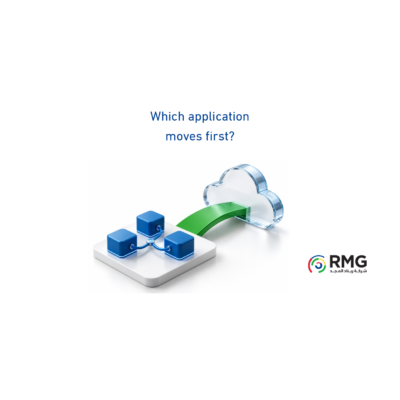
A migration plan can become a contest over which application goes first. A more useful question is which workload group can move while keeping the service understandable, operable and recoverable. Identify each application’s business owner, users, usage periods and supporting systems. Moving a virtual machine easily is not the same as making its service ready. This article proposes a discussion matrix for technology, business and finance rather than an official standard or a results study. Its purpose is to explain sequencing and missing evidence before committing to a wave or assuming every application suits the same path.
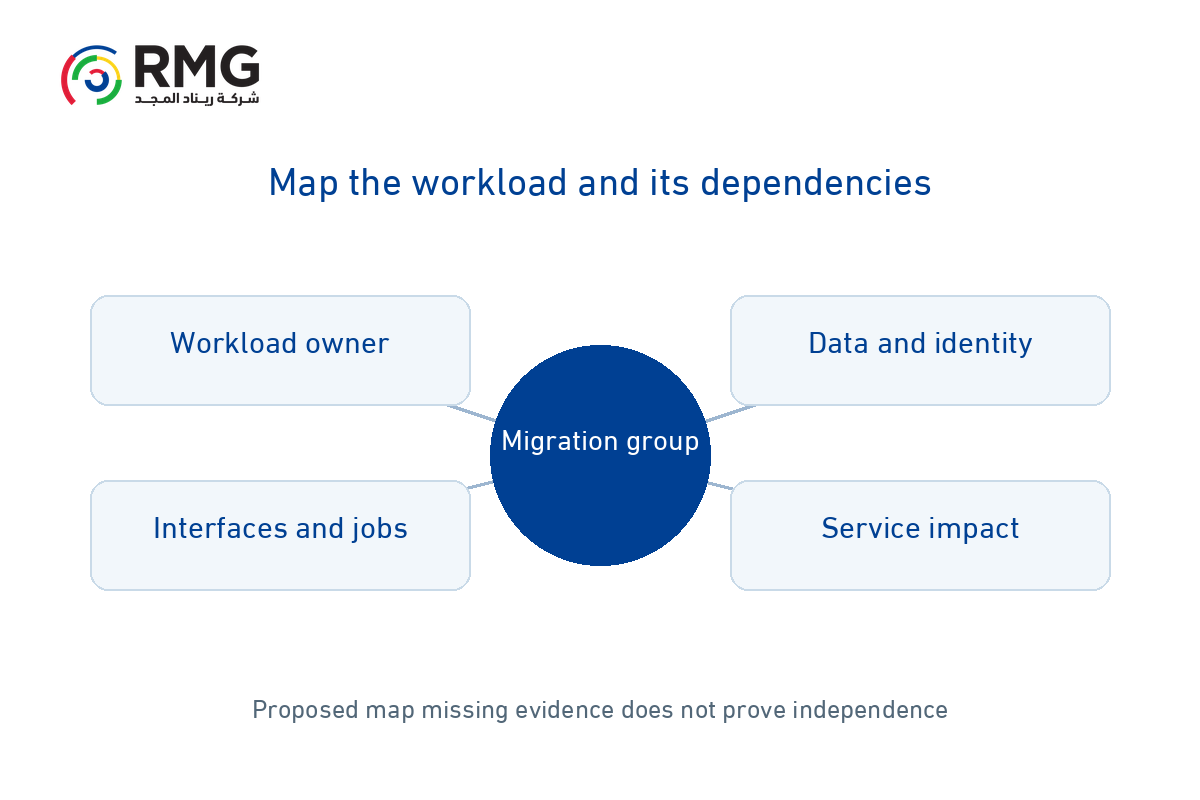
Make dependencies visible before sequencing waves
Map databases, identity, interfaces, scheduled jobs, reports and file sources. Check which components read or write data and what fails if one moves while another stays. Microsoft workload assessment guidance recommends recording dependencies in a shared repository and using them to plan migration waves. [2] It is platform-specific technical guidance, not a mandatory platform choice. In the proposed matrix, two applications may need to move together or have a dependency separated first, even when one looks easier alone. Distinguish tested relationships from assumptions: a missing dependency map does not prove independence.
Review data and constraints before scoring readiness
Record data type, owner, classification, storage and exchange paths, and constraints identified by specialists. A high score for transfer simplicity must not compensate for unresolved data processing authority or location restrictions. Treat critical blockers as decision gates, then compare candidates that pass them. Suggested questions include target service compatibility with application and database versions, licences and integration, and how that compatibility will be verified. This article does not assume one cloud model suits every use or that storage in a particular location alone satisfies all legal and security requirements.
Estimate disruption and rollback before setting a date
Identify affected user journeys and connected processes, with interruption and data loss tolerances from the organisation’s approved analysis. Specialists should define post-move service checks and a suitable rollback or failure recovery approach, naming execution authority. These limits depend on organisational context; this article supplies no benchmark numbers. Test data restoration and integration with components remaining outside the cloud, then record evidence and gaps. Copying data is not the end of migration. The intended result is an agreed working service whose failures can be observed and assigned to an accountable responder.
Include operational adoption and finance in readiness
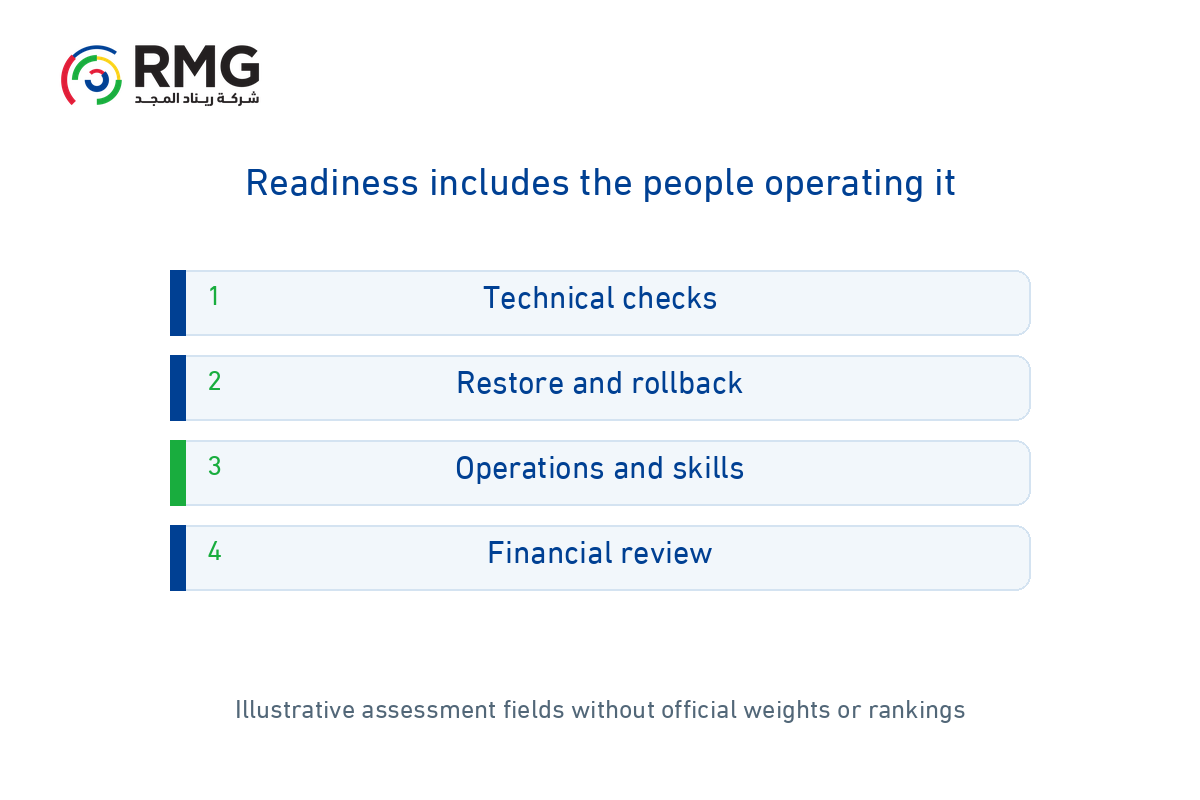
Ask who operates the service the next day and whether the team understands monitoring, access, cost, backup and escalation. Identify training needs, changing support tasks, documentation and handover responsibilities before expansion. Review usage, licensing, data transfer and parallel operation assumptions with finance rather than comparing one resource price. The proposed matrix gives operational readiness its own field: technical portability can still leave a team unable to manage the service. These fields do not promise savings or improvement percentages. They identify assumptions, reviewers and when the assessment must be refreshed.
Use reasons rather than false numerical precision
The table contains hypothetical cases, not customer applications or actual migration recommendations. For each workload, record ready for discussion, remediation needed or blocked, plus evidence, owner and next step. If the organisation uses weights or scores, explain and approve their basis for its context rather than treating them as an external standard. Revisit ordering when dependencies, business priorities or operating capability change. A first-wave candidate may help test a repeatable migration pattern within manageable impact. This is a planning suggestion, not a rule that the least important application must always move first.
| Hypothetical case | Readiness and blocker | Proposed next step |
| Relatively independent portal | Owner and operator identified; integration untested | Consider first wave after integration evidence |
| Shared database application | Write dependency with another workload | Plan a group or separate the dependency |
| Sensitive service without restore evidence | Recovery and data constraint unresolved | Resolve blockers before dating the move |
Review current Saudi references as applicable
NCA presents CCC-2:2024 as an extension and complement to its essential cybersecurity controls, covering provider and subscriber perspectives. [3] CST publishes a provider registration requirements guide under cloud service provisioning regulations. [4] Specialists determine applicability to the organisation, service and data, reviewing the PDPL and regulations where relevant. [5] A readiness matrix does not replace those reviews, and a provider comparison does not establish compliance. The matrix and wave ordering are organisational practices; applicable legal and security requirements remain governed by their current texts, scope and authorised responsibilities.
Bring readiness evidence to the cloud discussion
RMG’s current services describe infrastructure and application readiness assessment, workload prioritisation, migration plans, subsequent validation, integration testing and training. [1] This does not establish a universal project outcome, duration or cost. Prepare application owners, dependency maps, data classification, disruption limits and operational gaps, then contact RMG to discuss a plan suited to the organisation. A practical decision begins with a workload group whose readiness can be explained, blockers addressed and operation handed over with accountable evidence.