
Blog Body
Start with the user and the reason for asking
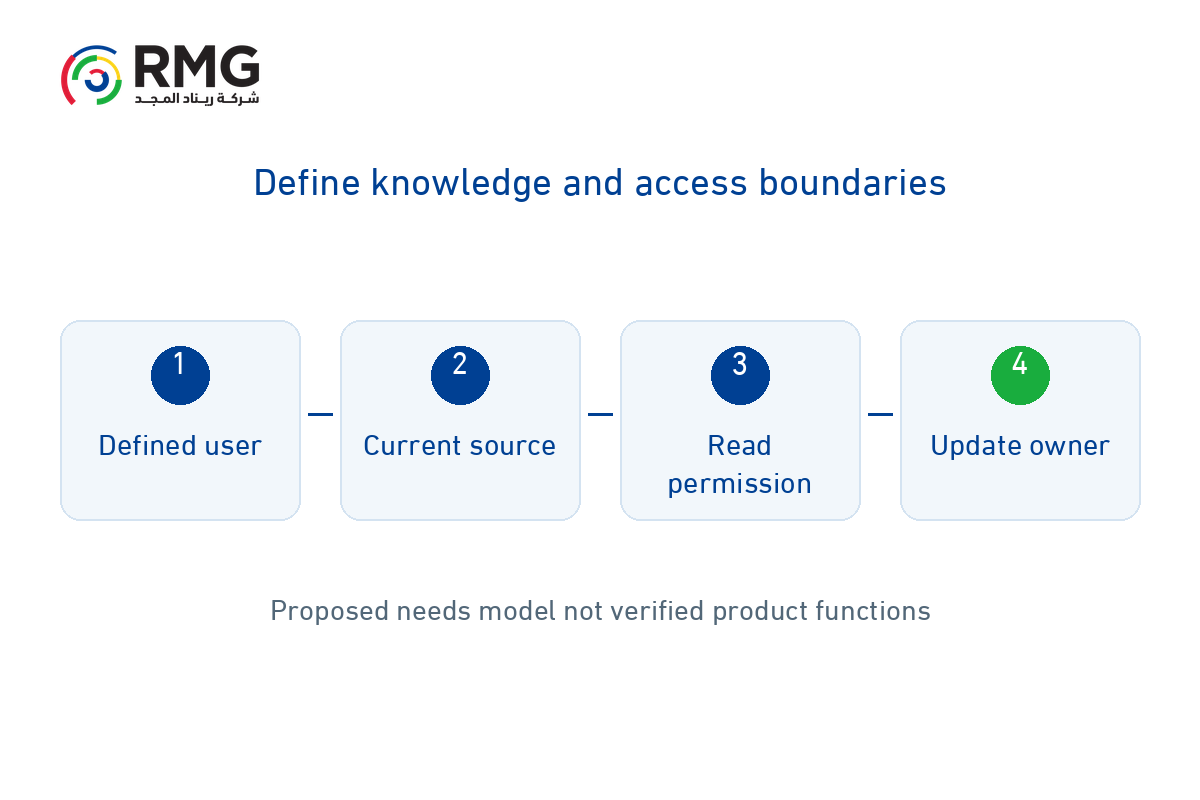
Putting organisational documents into a chatbot may look straightforward, but a new employee, process owner and external beneficiary need different answers and hold different permissions. First define who uses the assistant, which task they are completing and which decisions the system may not make for them. Choose a limited knowledge domain whose owner can review it, such as finding an approved internal procedure. Avoid promising answers to everything. The proposed needs document connects user, question, source, response boundaries and reviewer so business and technical teams can discuss a defined service rather than merely request a chat interface.
Define knowledge sources and their update owners
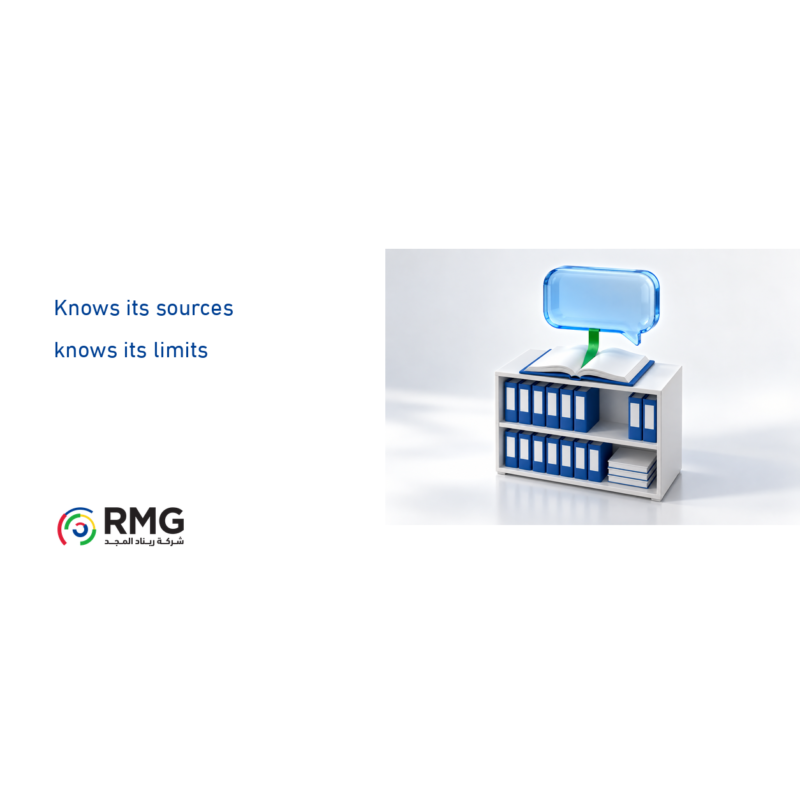
List authorised references with document name, owner, version, status and permitted audience. A file in a shared folder is not automatically current or suitable for every user. Define what happens when sources conflict, a policy expires or a replacement arrives. Knowledge maintenance is not solely technical: content owners decide information validity, while technical teams record inclusion and withdrawal mechanisms. NIST MAP recommends documenting purpose, users, context and limitations. It is voluntary AI risk guidance rather than certification of the assistant or an independent Saudi requirement. [2]
Classify questions before designing answers
Collect real questions after removing unnecessary personal or confidential information. Group them into documented guidance, context-dependent summaries, exceptions requiring a specialist and out-of-scope requests. Define the response form for each: a referenced summary, clarification, insufficient-evidence statement or human referral. Finding a request form differs from approving an exception. The former may be supported by an authorised reference; the latter may need an empowered person. These hypothetical needs examples are not established functions of every product. Fluent or lengthy language alone does not establish correctness: the source must suit the question, remain current and be available to that user.
Separate retrieval from action execution
Decide whether the requirement is to find and explain information, propose a draft or execute an action in another system. Each step introduces different access, verification, logging and review needs. This article does not grant an assistant authority to change records, approve requests or make employment or legal decisions. An initial scope may be limited to a grounded answer and a clear specialist referral, subject to feasibility confirmation. Test requests attempting to bypass knowledge boundaries or access an unauthorised document. Knowing that a source exists does not make its content, or a summary revealing it, available to every user.
Include review and abstention in the scope
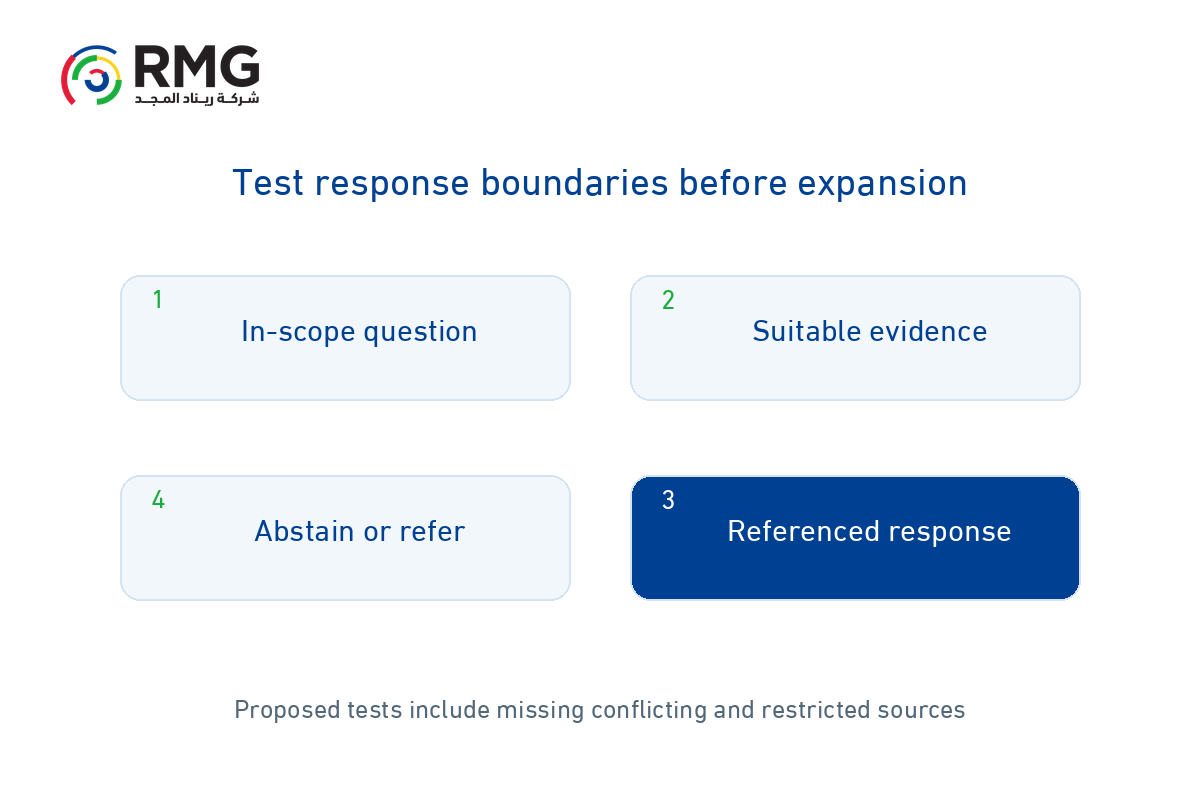
Design test cases covering a clear question, obsolete source, conflicting references, missing evidence and an unauthorised user. Knowledge owners and specialist reviewers define acceptable responses and limitations, recording source, version and rationale. Track correct abstention and useful referral alongside correct answers; answering every question can be undesirable. When an error appears, determine whether the cause is content, permission, retrieval or wording, record the change and retest affected cases. These suggested measures are working examples rather than a study or official performance targets, and they do not establish accuracy in an untested environment.
Document a need the team can review
The table presents three hypothetical cases linking questions, sources and human authority. Add users, languages, reference owners, update method, exclusions, reviewers and trial success criteria. Distinguish a requested requirement from a verified capability; a document field is not a supplier commitment before implementation is discussed. Where a key source is disorganised or lacks an update owner, record and address the gap before expanding the assistant. A useful initial scope may be a small trusted library serving defined questions, expanded after evidence review rather than connecting every repository at once.
| Hypothetical case | Required source | Response and review boundary |
| Find a form | Current procedure authorised for the user | Reference and link; no request approval |
| Summarise a policy | Approved version with update owner | Qualified summary; exceptions reviewed |
| Question without evidence | Insufficient in-scope source | State the gap and refer to a specialist |
Review data protection for the actual use
Documents, questions and conversation records may contain personal data. The organisation should review PDPL and regulatory applicability, purpose, access, processing, retention and any transfer for the case concerned. SDAIA guidance explains that data can identify someone directly or indirectly, and states that the guidance itself is not a binding legal instrument. [3] An internal document is not automatically available to every user, and removing a name alone does not eliminate risk. Security and privacy specialists should examine data flows and provider arrangements before operation. The question categories, referrals and review steps proposed here do not by themselves establish comprehensive compliance or authority to issue legal advice.
Discuss the advisory assistant through a defined need
RMG’s current page presents its Consulting Robot as an AI-based solution customisable to organisational needs. [1] This article does not repeat first-in-market claims, absolute accuracy or full compliance assurances, assign every proposed requirement to the product or assume another product is the same offering. Prepare an initial knowledge scope, question samples authorised for sharing, reference owners and referral and review boundaries. Contact RMG to discuss a suitable solution. Begin with the organisation’s need and knowledge accountability, then verify required functions, connections and operation with the team.