
Blog Body
Explain the increase before deciding to cut
A higher bill may reflect legitimate growth, an unattended test environment or a change in the cost basis. Calling every increase waste hides these differences. Cloud engineering, technology and finance teams need a shared view of the service consuming resources, its decision owner and the change in business demand. This article proposes a practical review card. It is a working aid rather than an official standard or a promise of savings. The useful outcome is a traceable decision to improve a specific resource while protecting service requirements.
Establish a consistent comparison basis
Choose a defined accounting period and distinguish usage from discounts, commitments, taxes and adjustments using provider and contract data. Avoid comparing a complete month with a partial period or treating consumption reports as cash payments without reconciling differences. Record included services and accounts and any exclusions. Investigate business demand, configuration changes, data transfer, storage and newly deployed resources as possible drivers. Cost per completed transaction can help when its denominator is reliable and its scope stable. If that measurement is unavailable, document the gap instead of presenting a misleading unit metric.
Link cost to a service and an owner
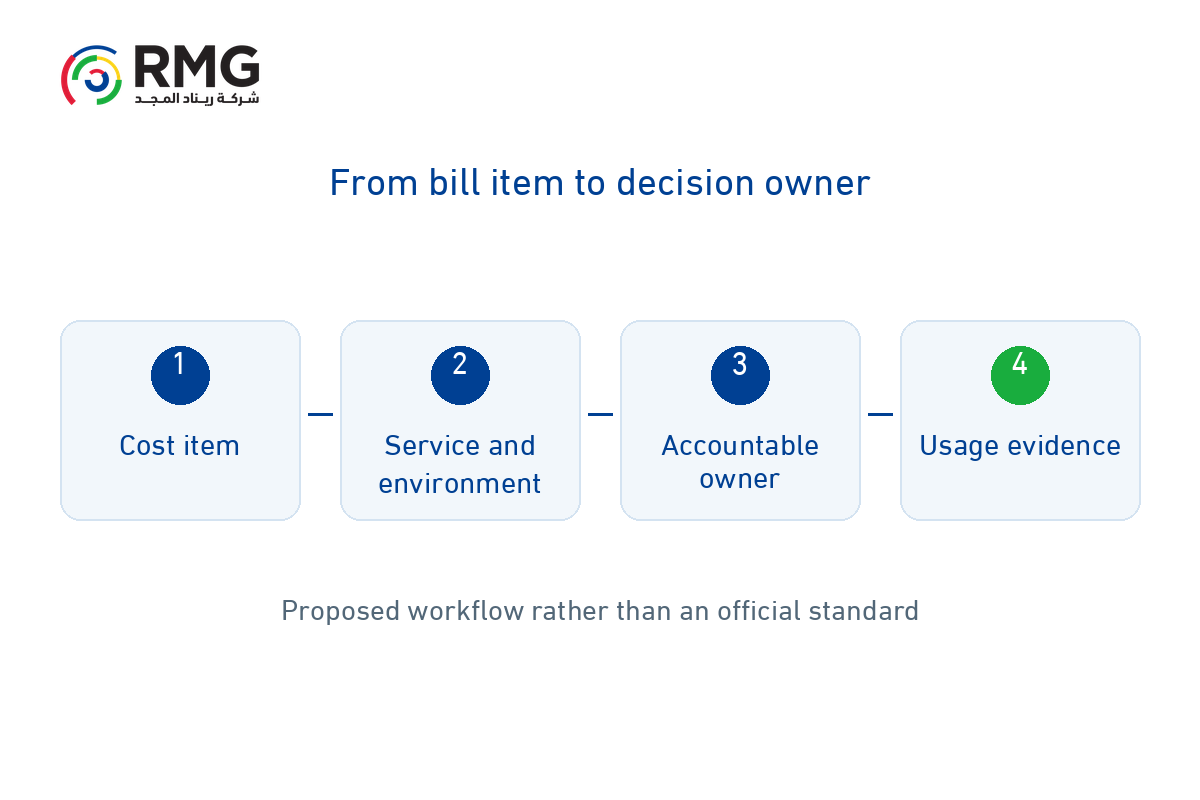
The FinOps Foundation describes allocation using accounts, tags and metadata to connect cost and usage with organizational responsibilities [2]. Start with a recognizable business service, then link the application, environment, cost centre and owner. Name the person or role authorized to approve a resource change; a team label alone does not establish that authority. Use a documented allocation basis for shared costs and retain an unallocated category until ownership is resolved. Estimated splits should not imply accounting precision. Review metadata when resources are created or ownership changes, and document an alternative for charges that cannot be tagged.
Validate usage before calling it waste
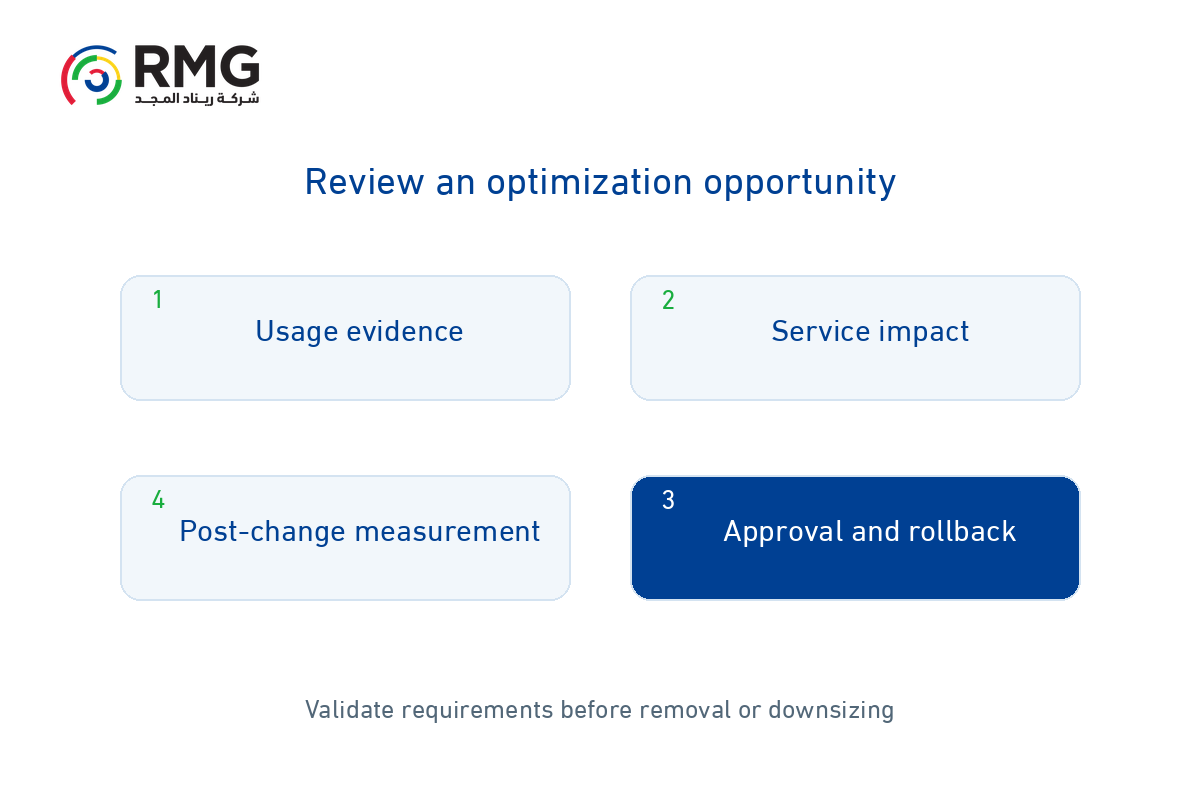
Observe a period that covers normal peaks, quiet periods and operating cycles. An apparently idle resource may be required for recovery or an important periodic task. Microsoft guidance distinguishes unused resources from resources that need sizing adjustments [3]. Establish the resource function, dependencies and reason for retention, then define a testable action such as resizing, scheduling a nonproduction environment or retiring a resource confirmed to be unnecessary. Low average CPU utilization alone is insufficient. Consider memory, storage, performance and peak demand as relevant to the service, and obtain the application owner’s input before making changes.
Turn an observation into a decision card
Capture service, owner, period, cost basis, usage evidence, opportunity, assumptions, change impact and rollback. Do not assign savings before understanding actual pricing and commitments: lower consumption may free capacity without immediately reducing the bill. Distinguish estimated savings from an observed financial outcome and include implementation, transfer or support costs. The table presents independent illustrative cases, not project results or instructions ready for execution. The team must assess each decision against its environment, contracts and service needs.
| Illustrative case | Evidence to check | Proposed decision |
| Always-on test environment | Required hours and dependencies | Trial schedule with rollback |
| Storage with no clear owner | Data purpose retention and obligations | Resolve ownership before deletion |
| Low-use server | Peaks recovery role and performance | Test resizing after authorization |
Protect security and continuity
Financial improvement does not justify removing encryption or logs or reducing backups without reviewing risks and requirements. Microsoft discusses cost tradeoffs with reliability and security, including the effects of reduced redundancy and constrained scaling [4]. In Saudi Arabia, NCA’s CCC-2:2024 defines the scope for providers and tenants, including government entities and private entities owning, operating or hosting critical national infrastructure [5]. Specialists should establish applicable obligations before changing regions, retention, backups or protective measures. The proposed cost card is an operational practice; it does not replace compliance assessment or change authorization.
Test and measure the outcome
Apply the approved change within a limited scope where feasible, defining service acceptance, rollback and monitoring ownership. After a period appropriate to the workload, compare cost, usage and performance on the same basis and explain demand changes. If the bill falls because fewer services were delivered, do not attribute the whole reduction to optimization. Record observed outcomes, estimates that remain uncertain, the person accepting the result and the next review point. Keeping a resource after confirming its necessity is also a valid decision. The objective is understood spending that serves the business, rather than a bill assessed in isolation.
Start with one service and a clear owner
Choose a service with traceable costs and an owner able to explain consumption. Review its card with finance, operations and security, then prioritize opportunities by evidence, feasibility and service impact. RMG offers cloud transformation services, and its published strategy article discusses FinOps practices and consumption monitoring [1, 6]. If your organization needs to connect its bill with clearer responsibilities and decisions, discuss a suitable scope for cloud cost optimization and governance with RMG. Savings and delivery times should be assessed rather than assumed.