
Blog Body
Start with the service at risk
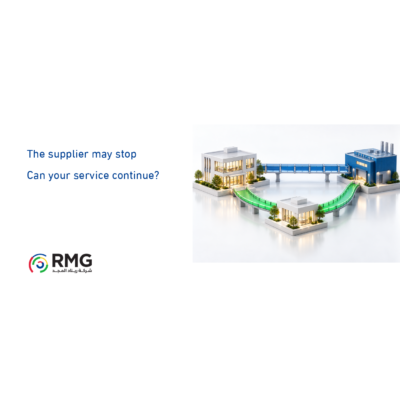
A supplier contract alone does not explain what the organization will do if delivery becomes unavailable. Connectivity, support or data transfer may stop while other components remain operational. The supplier may even be operating while the organization cannot reach an authorized decision maker. Start with a defined business service, then examine its supplier dependency and what the organization can operate during disruption. This article proposes a practical dependency record connecting ownership, alternatives, communication and validation without assuming that replacing a supplier is always quick or possible.
Describe the dependency and its impact
Record the service, owner, users and supplier-provided component, then explain when disruption affects delivery. Does it prevent receiving requests, processing them or producing results? Identify what remains available and what needs temporary routing or controlled suspension. Use business impact analysis and organizational requirements to establish recovery priorities and acceptable operating levels rather than one generic time target. New Zealand government continuity guidance discusses critical activities, external connections and alternatives. It is used here as general practice guidance, not Saudi legislation. [2]
Create a maintainable dependency record
Include service and contract references, the internal service owner, the supplier contact and deputy, delivery scope, known downstream dependencies and disruption impact. Add activation conditions, decision authority, the alternative and its limits, prerequisites for switching or operating it, authorized evidence locations, the latest test and open actions. Do not store passwords or sensitive contents in a widely shared record; refer to an approved access mechanism. If supplier capability or a downstream dependency is unverified, say so and assign an owner to resolve the gap.
Validate the alternative before calling it available
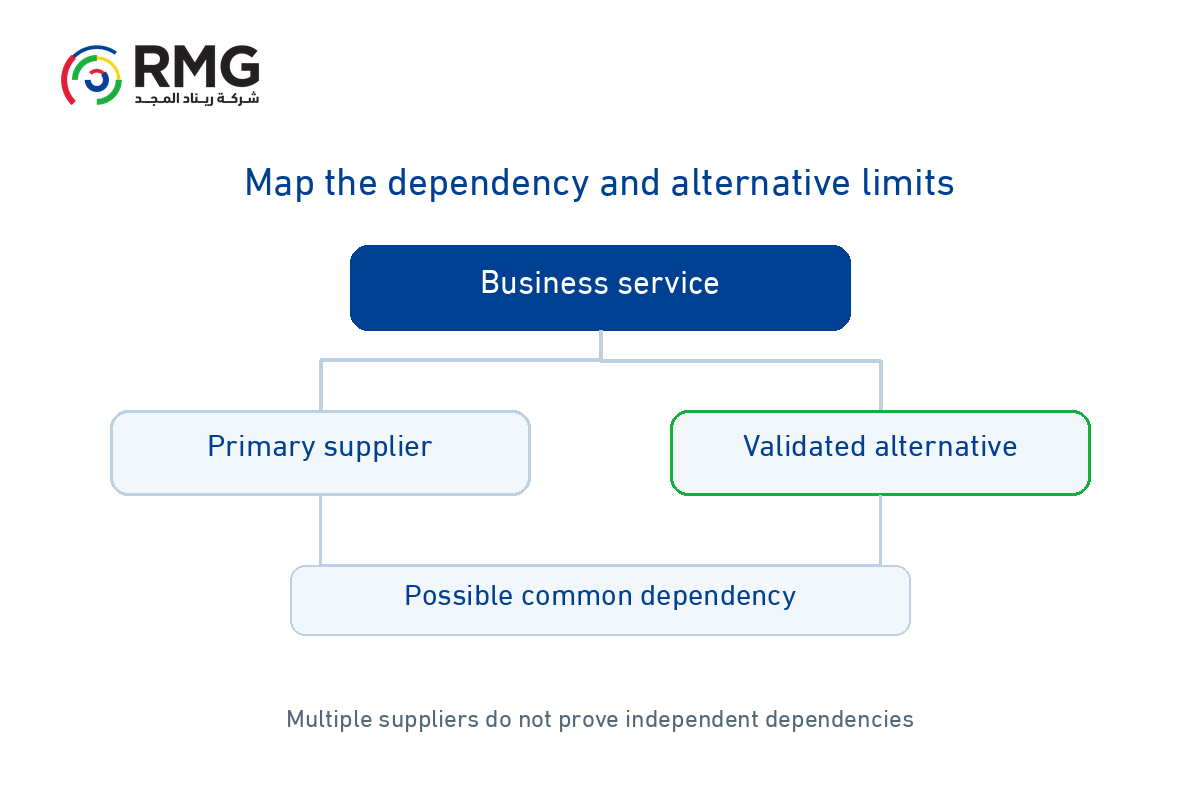
An alternative may be another supplier, limited internal operation or a temporary manual procedure, selected according to service needs and risk. Check resources, licensing, access, compatibility, data formats and operating capacity. Two suppliers may share connectivity or a platform and fail together, so examine common dependencies instead of simply listing two names. Record capability limits and how queued requests will be retained and reconciled. A named alternative is not proof of readiness; obtain evidence from an appropriate rehearsal before relying on it.
Define decisions and communication before an incident
Agree who assesses impact, authorizes the alternative, contacts the supplier and service users, and records events. Distinguish an initial technical alert from a business decision to reduce or redirect service. Test approved contacts and deputies within agreed support arrangements and specify escalation if no response arrives. Operational updates should state the affected service, known status, action taken and the approved channel for the next update. Do not announce an unconfirmed cause or recovery time.
| Record element | Validation question | Proposed evidence |
| Dependency and owner | What stops and who decides? | Service map and authorized owner |
| Alternative and limits | Can it actually operate? | Rehearsal record and known limits |
| Contact and return | Who communicates and reconciles? | Contact route and reconciliation steps |
Review security obligations within their scope
For entities subject to ECC–2:2024, the official implementation guide explains third-party requirements, including cyber-incident communication, confidentiality, secure data removal at service end and risk assessment for outsourcing or managed services under applicable controls. Its scope includes government, affiliated entities and critical national infrastructure organizations; it should not automatically be generalized to every business. Review sector and contractual requirements with the responsible specialists. The proposed record neither replaces controls nor constitutes compliance approval. [3]
Rehearse one service
In a hypothetical example, choose a request-intake service relying on an external connection and simulate its unavailability without causing an unauthorized outage. Exercise impact detection, communication, decision making and activation of the available alternative. Then verify request receipt, absence of duplicates and traceability. Define the exercise environment, stop conditions and data safeguards in advance. Record actual timing, blocked steps and participants without presenting the outcome as a general guarantee. A tabletop discussion does not establish that a technical switch succeeded; each exercise type has its own evidence limits.
Plan return to normal and close exercise gaps
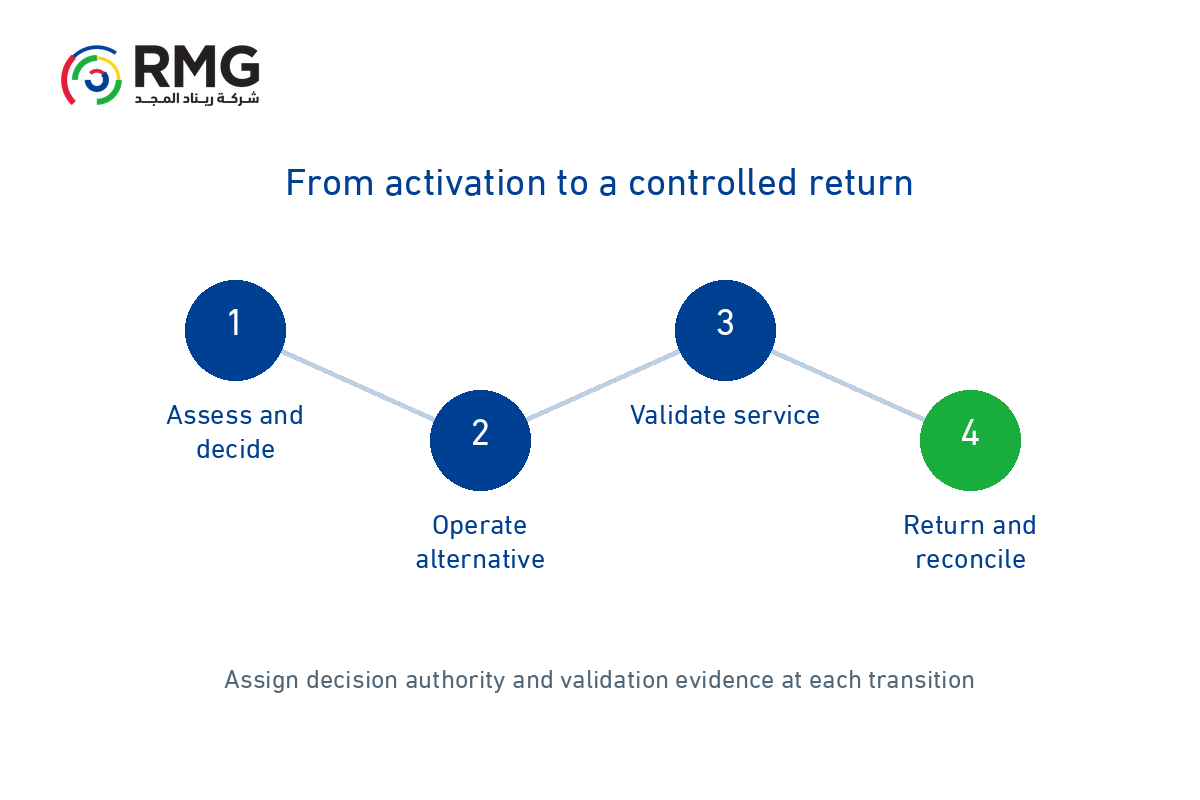
The plan continues after the alternative starts. Identify who confirms supplier stability, how normal delivery resumes gradually and how requests and data created in temporary operation will be reconciled. Retain a record of transfers and re-entry to prevent duplication or loss. Turn exercise or incident findings into actions with an owner, due date and closure evidence. Update the record when the service, supplier or contact route changes. Contract amendments and alternative procurement follow authorized processes; a continuity plan does not itself create a commercial commitment.
Use the record for a practical discussion with RMG
Start with the service most exposed to an external dependency and review the record with its owner, continuity, technology, procurement and security functions as needed. Unknowns become supplier questions or validation tasks. RMG’s continuity service page describes risk identification, strategies, planning, response and ongoing updates. Discuss continuity and dependency-management needs using the gaps uncovered. This article assumes no customer result, guaranteed continuity or unverified product capability. Engagement scope follows an assessment of the need. [1]