

Blog Body
Start with what happens after an alert
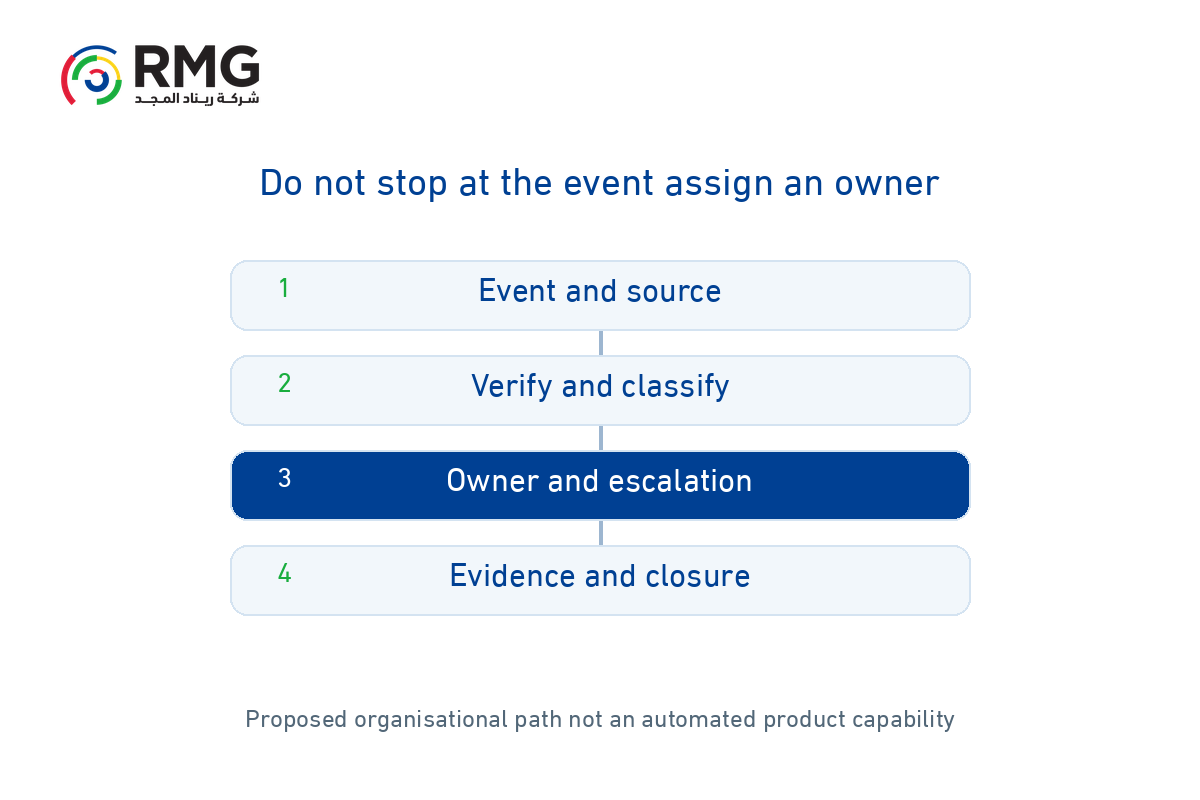
A monitoring dashboard can display an important event while leaving unanswered who read it, what was checked and who authorised action. Alert volume does not establish follow-up. Choose a defined legitimate security use, then map receipt, verification, escalation and outcome documentation. This article proposes an organisational path rather than a ready-made technical response procedure or unverified product functions. Each event requiring attention should have an owner, evidence and an accountable decision, distinguishing information collection from authority to intervene in a system or service.
Distinguish an observed event from a confirmed incident
Record source, time, affected asset or service and whether data is complete and current. A specialist then checks context before classifying the case using organisational criteria; it may be authorised activity, a duplicate or a matter needing more investigation. NIST SP800-61 Rev.3 recommends defined incident criteria and documented response roles and authorities. [2] It is voluntary technical guidance rather than a substitute for Saudi legal applicability. Preserve the classification rationale and supporting reference. An alert should not automatically become an accusation or shutdown decision, nor should a case close because evidence was never collected.
Assign follow-up ownership and decision authority
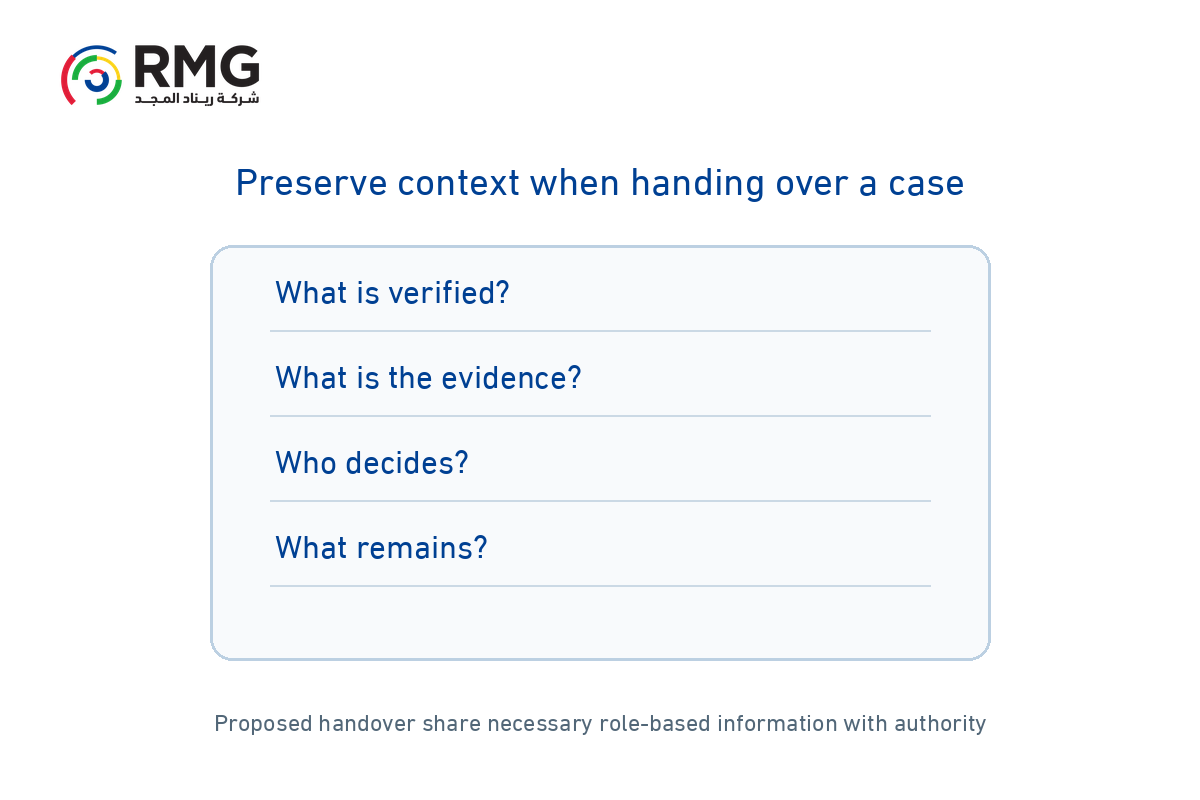
For each path, name the receiver, verifier, case lead after incident classification and authority for business-impacting action. Provide an alternate and a handover that preserves context, completed work and pending decisions. Service owners, security, IT and privacy may participate without sharing identical privileges. Record acceptance of responsibility, timing and decisions requiring higher authority. If impact or data characteristics change, review escalation under policy. This article sets no universal shift model or response deadline; service risk, organisational capacity and obligations determine them.
Make escalation carry reviewable context
Replace a vague request to take action with a clear summary, affected asset, evidence authorised for sharing, current classification, unresolved questions and requested decision. Specify approved channels and when specialists, leadership or external parties become involved under the response plan. Distinguish internal review from regulatory notification or public communication, each with different authority and requirements. Recipients need information relevant to their roles rather than every full record. This proposed handover format reduces context loss without assuming that monitoring software creates it or executes actions automatically.
Define evidence of response and closure
Changing a status to closed is not the only proof of resolution. Specialists define evidence of authorised action, outcome verification and remaining risk or monitoring. Record dismissed cases with reasons, duplicates linked to an original case and closure review authority. New information should make reopening or reclassification understandable. Review whether missing evidence, unclear ownership or failed handover caused difficulty. Use findings to improve process, policy and awareness rather than announce an undefined success rate or hide unresolved alerts from reporting.
Exercise the path with an authorised hypothetical event
The table’s illustrative cases are not real incidents, accusations or customer outcomes. Use an authorised sample record in a tabletop exercise to check whether it reaches the reviewer, ownership is accepted, the decision authority understands the request and closure evidence is available. Record handover gaps and required updates or training. Suggested measures include handover completeness, clear ownership and decision traceability rather than alert counts or deadlines borrowed from an article. A successful exercise establishes only what was tested, not every integration, real incident or automated capability.
| Hypothetical case | Verification and ownership | Decision and closure evidence |
| Unusual activity alert | Reviewer checks context and authorisation | Classification rationale and approved action if needed |
| Escalation with material impact | Case lead coordinates with service owner | Authority action evidence and outcome verification |
| Duplicate or uncertain alert | Link original or request missing evidence | Merge rationale or reason the case remains open |
Review applicability and privacy before expanding monitoring
Specialists review current ECC-2:2024 and applicable sector and organisational incident handling and notification requirements from official sources. [3] Where monitoring includes personal data, review purpose, permissions, retention, disclosure and processing parties under the PDPL and regulations. [4] Recording capability does not automatically authorise collecting every part of an activity or sharing recordings without limits. Define legitimate scope, necessary data, access and use review before activation. The proposed diagram is a management practice rather than comprehensive compliance judgement, a universal notification deadline or a substitute for security, privacy and legal authority.
Discuss the comprehensive security system within documented scope
RMG presents its Comprehensive Security System for monitoring user activity, alerts, recording, reporting and possible SIEM integration on its current page. [1] That description does not establish developer identity, every contract condition, automated containment or response, or implementation of every proposed workflow step. Prepare a legitimate use case, follow-up owner, authorised evidence sample and verification, escalation and closure path. Contact RMG to discuss suitable scope and integration. Better follow-up begins when the team knows what was observed, who verifies it, who authorises action and which evidence demonstrates the outcome.