

Blog Body
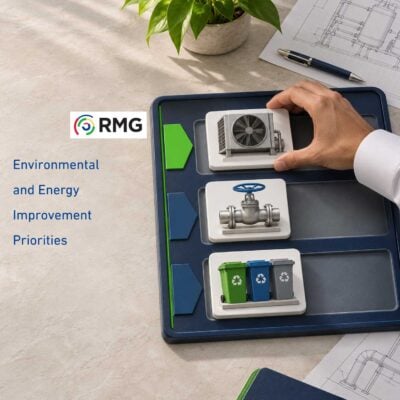
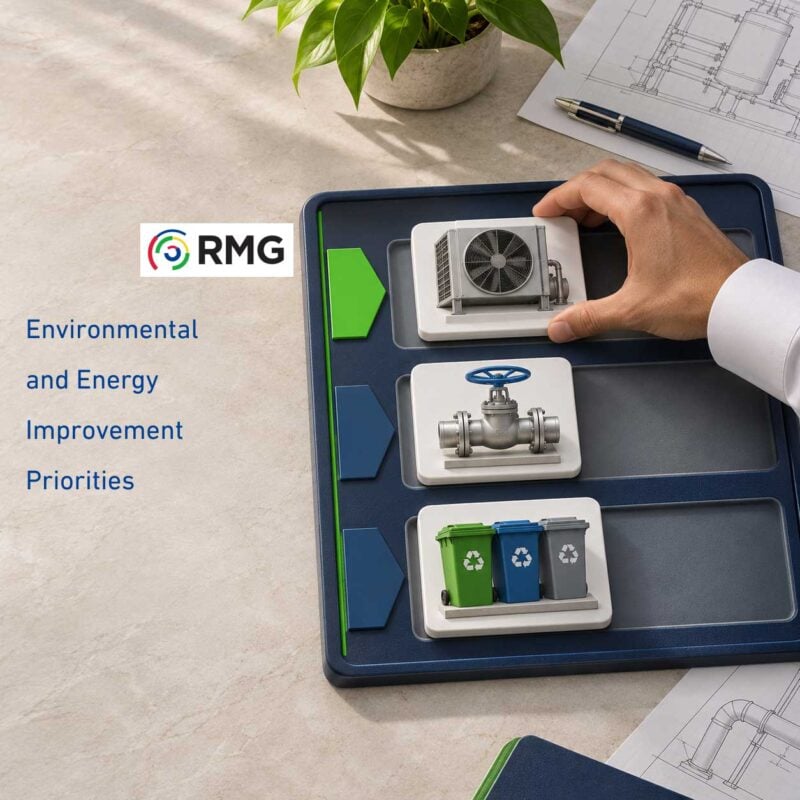
Environmental and energy improvement priorities begin with knowing what needs attention, what can be measured and who can deliver the change. A high utility bill or a promising list of ideas is not enough to select the next project. Sustainability, energy, environmental and operations teams need a shared register linking each initiative to a specific problem, a baseline, a data source and an owner responsible for verifying the outcome.
This article proposes a practical way to build that register and use it in prioritisation meetings. It is an adaptable management practice, not an official scoring model or a substitute for the requirements applicable to a facility or a project’s technical assessment.
Start with scope and an obligations check
Define the sites and processes covered. Are you reviewing an office building, a production line or the whole facility? Separate compliance matters and risks requiring action from discretionary improvements. An existing obligation should not compete with a cosmetic project solely on ease of delivery. Record the applicable reference, responsible person and actual deadline, and escalate resource conflicts to the decision owner.
In Saudi Arabia, the National Center for Environmental Compliance describes its role in overseeing facility compliance with the Environmental Law and its implementing regulations and in issuing environmental permits. Identify the requirements and permits applicable to the facility’s activities through the competent sources. The prioritisation method proposed here does not establish uniform requirements for every facility. [1]
For energy management, the Saudi Energy Efficiency Center presents routes including ISO 50001 certification, SEEC 50001 Ready and an internal system meeting the relevant route’s requirements. Check the programme’s scope and requirements for your facility; these options do not establish that every facility must obtain one particular certificate. [2]
Connect each problem to traceable data
Describe the problem in operational terms: cooling running beyond required hours, unexplained water consumption or material losses in a defined process. Identify the unit, measurement boundary and source, such as a meter reading, invoice, maintenance record or waste weighing record. Do not combine different units into a vague sustainability indicator: energy performance may improve while water use or waste performance deteriorates.
Assign a data owner, collection frequency and approach to missing readings for each indicator. Distinguish measured values from estimates and supplier projections. If a meter serves several processes, disclose that boundary before attributing consumption to one initiative. Improving measurement may itself be the first initiative when the evidence is insufficient for an investment decision.
Establish a baseline for a fair comparison
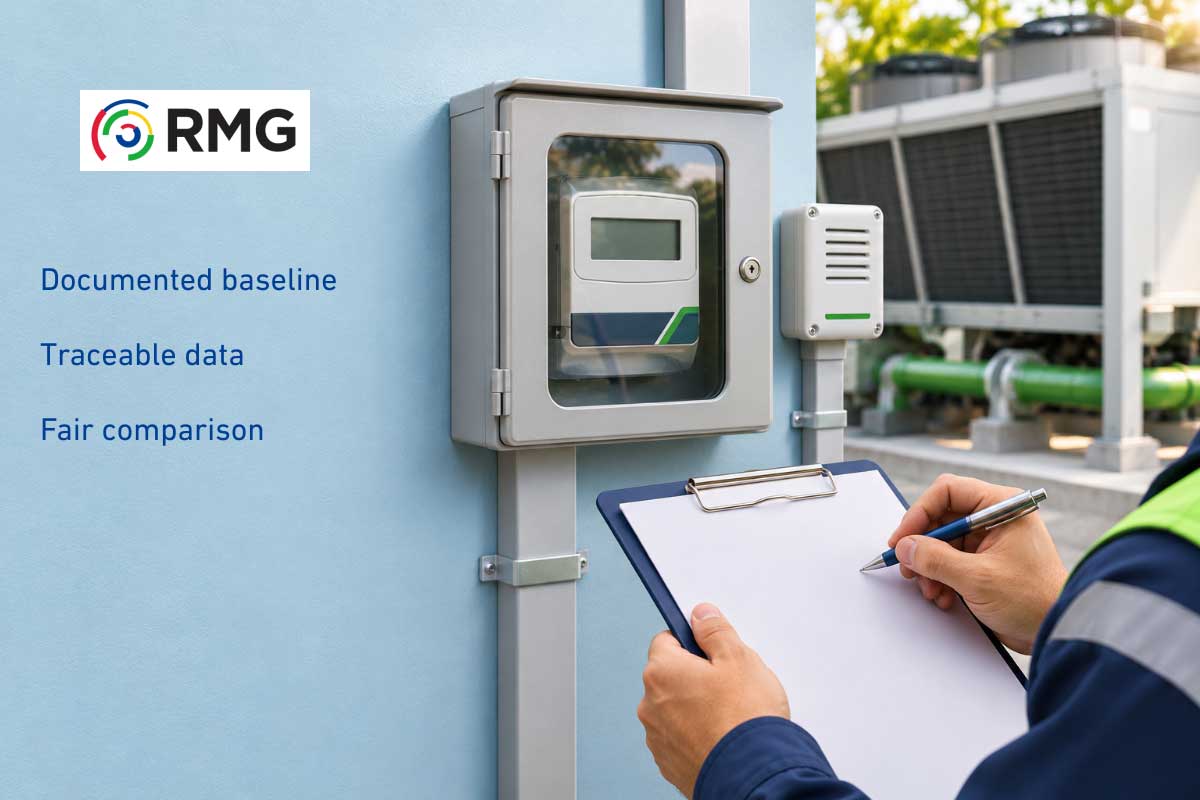
A baseline is the reference for comparison, not simply the lowest-consumption month. Select a period representative of operations and document the measurement boundary and influential changes, such as production volume, operating hours or weather. The 50001 Ready guidance calls for energy performance indicators and associated baselines, with significant relevant variables considered in comparisons. [3]
Retain total consumption alongside the indicator appropriate to the process. Lower consumption after a fall in production does not, by itself, demonstrate better efficiency. Do not reset the baseline to make the outcome look better: record the reason, method and authority for any adjustment. Where the data cannot support a fair comparison, mark the result as inconclusive and specify what is needed to complete the assessment.
Compare impact and delivery readiness
After addressing obligations and urgent risks, use consistent questions to compare opportunities. What environmental impact is expected? Which energy consumption is affected? How strong is the evidence? Can the solution be delivered within operations and maintenance constraints? What resources and dependencies are involved? Use understandable descriptions such as ready for a trial, requires measurement or requires technical assessment, and explain the decision.
Do not automatically prioritise the largest projected saving. It may depend on undocumented assumptions or shift impacts into water consumption or waste. Ask what the estimate includes and whether operating costs, maintenance and the required shutdown have been considered. Avoid counting the same saving twice where two initiatives address the same equipment.
Teams may use internal scores or weights when useful, but should define, explain and approve them within the organisation. Such weights are not an official standard, and turning weak data into a numerical ranking does not make the conclusion certain.
Make the initiative register useful for decisions
Each row should contain the initiative identifier, site or process, problem, applicable regulatory reference where relevant, indicator and unit, baseline period and data source, expected impact and assumptions, improvement owner, data owner, dependencies, current decision and rationale, review date and evidence required for closure.
Consider an illustrative example that is not drawn from a study or a client: adjusting a cooling schedule, investigating a suspected water leak and replacing an ageing unit. A schedule change could be trialled after operations approval and confirmation of site needs. The water work begins by confirming the leak and its extent. Replacement requires a technical comparison and a verified baseline. This example does not prescribe the right order for every facility; it shows why the next action depends on the available evidence.
Close initiatives after verifying the outcome
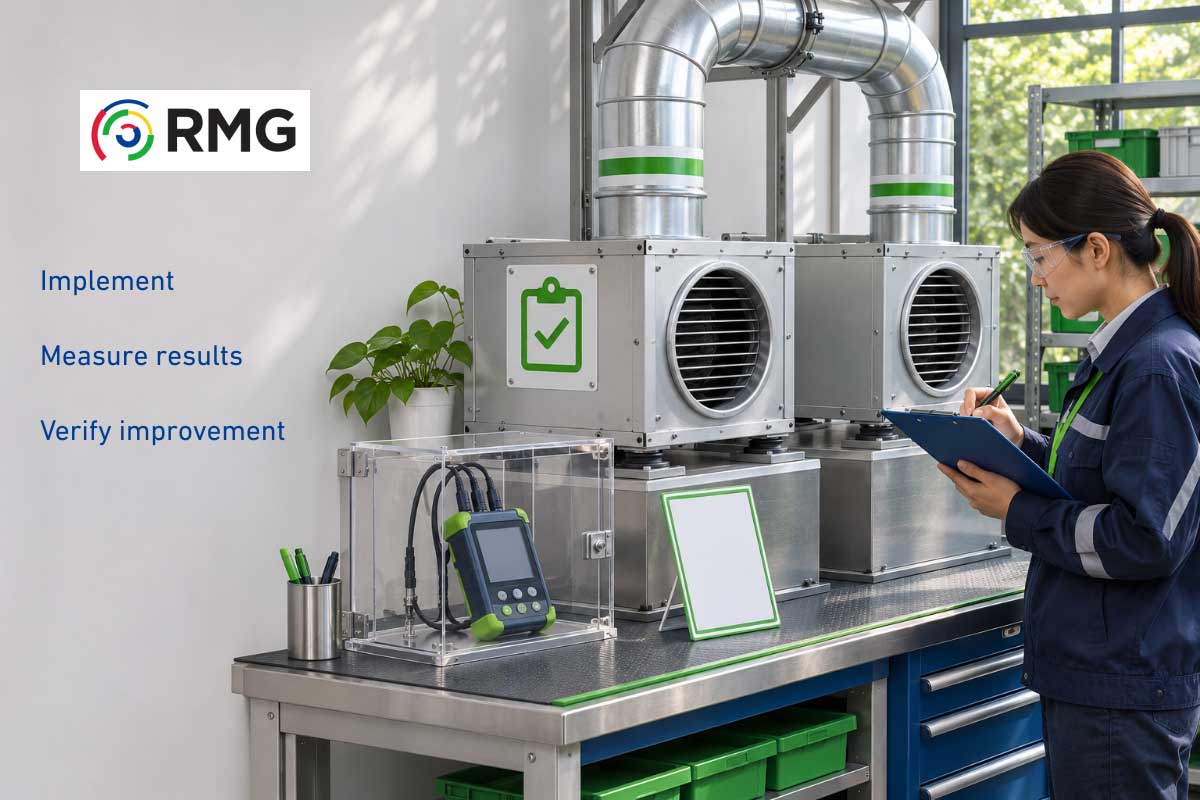
Before implementation, agree the verification period, measurement source and person responsible for reviewing the outcome. Afterwards, compare performance within consistent boundaries, record operational changes and check for unintended effects. Installing equipment or completing a work order is not equivalent to demonstrating improvement.
Use clear statuses: implemented and awaiting verification, improvement verified, result inconclusive or corrective action required. If the expected improvement is not observed, review the assumptions, operating method and measurement before expanding the trial. Do not convert reduced electricity use into an avoided-emissions figure without a documented calculation method and an emission factor appropriate to the scope.
Begin with a manageable set of initiatives
Bring together environmental, energy, operations, maintenance and finance representatives to review the register. Identify initiatives with usable data, an accountable owner and a clear next decision. A monthly review of active initiatives may be useful, with closer follow-up for obligations or urgent issues according to their nature. This is a suggested management cadence, not a statutory deadline.
RMG presents environmental and energy management consulting services related to scope, roles, implementation, measurement and improvement. A useful initial discussion starts with facility boundaries, available data and the gaps to address, rather than a generic project list or savings forecast. Prioritisation becomes useful when every decision leads to an owner, a next action and evidence that can be reviewed.