

Blog Body
An IT service catalogue starts with the user’s questions: What can I request? Am I eligible? Where do I submit the request? What happens next? If employees must understand the IT department’s organisational structure before finding an answer, the catalogue needs revision. The aim is a service description that people can understand, request and track, with expectations the delivery team can meet.
Start with an outcome the user needs
Collect recurring service-desk requests and discuss them with user representatives. Requests for access to a shared folder may appear under several technical labels, although the desired outcome is the same: an authorised employee can reach their work files. Use a recognisable name and include technical terms and common alternatives as search synonyms. The UK government’s service guidance describes services through the outcomes they help users achieve, including when users are government employees. [1]
Do not automatically create a separate entry for every device or application. A server is a component supporting a service; file sharing is what the user requests. Keep system and supplier dependencies in the internal operational description, while showing users what they need to use the service. Newcastle University’s framework distinguishes user-facing services from components exchanged between internal teams. This is an institutional practice reference, not a Saudi requirement. [2]
Build a usable service entry
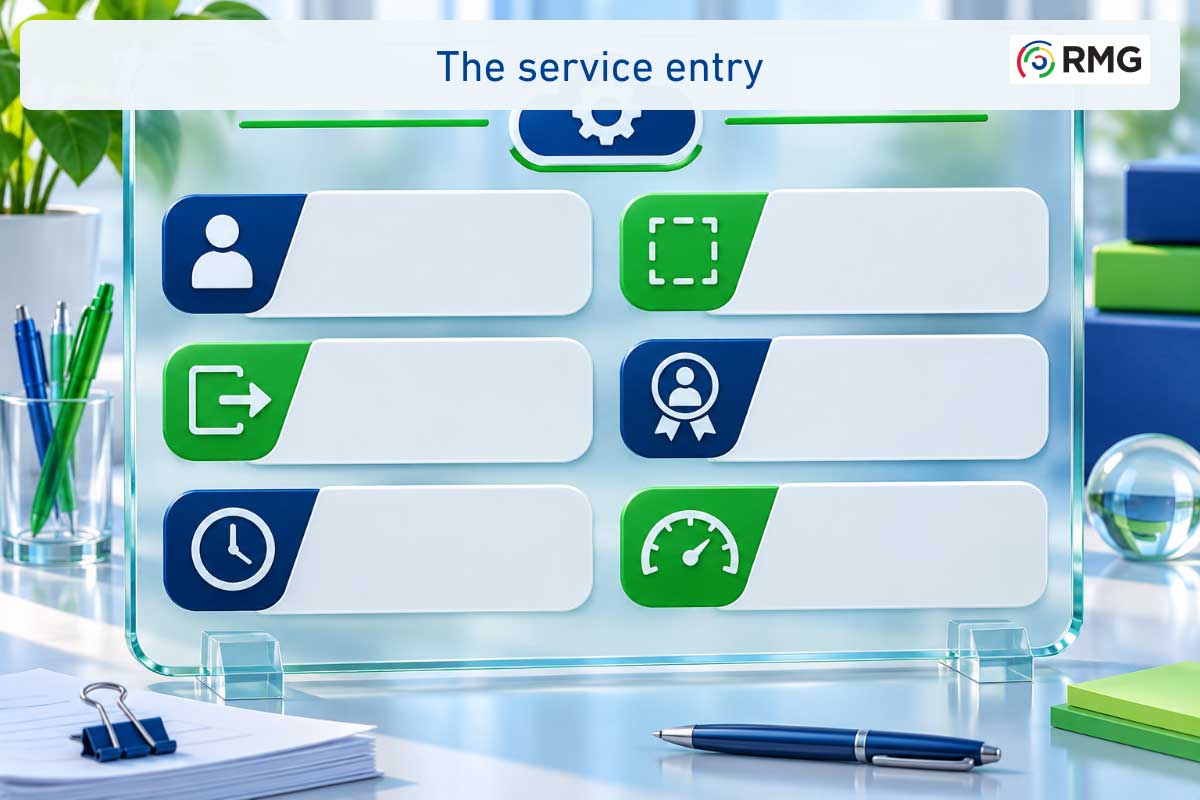
Begin with the service name, expected outcome, eligible users, scope and exclusions, request channel, prerequisites, support hours, user responsibilities, and tracking and escalation arrangements. Include a service owner and a review date. Not every operational detail or individual employee name belongs in a public entry: an approved support function and channel can be published while execution responsibilities remain internal.
Consider an illustrative entry for “Request access to a shared folder”. Eligible users are authorised employees. Scope covers granting or changing access to managed folders. Prerequisites include identifying the folder, the access level and the required approval. Requests go through the service portal. The outcome is confirmation of completion or an explanation of why the request cannot be fulfilled. Creating new storage or recovering deleted files is not automatically included. Show these as related services or direct each case to the appropriate process. This example is not an access policy or a ready-made time commitment.
Explain time commitments before publishing numbers
An initial response target differs from a request-fulfilment target, and both differ from restoring an interrupted service. Explain when the clock starts, what working hours mean and how time awaiting missing user information is treated. Do not publish an attractive duration simply because the template has a duration field. Review actual delivery data, team capacity and supplier dependencies before approving a target. GOV.UK guidance connects user-support planning with service levels and the resources needed to deliver them. [3]
In Saudi Arabia, the Economic Cities and Special Zones Authority’s service-level agreement describes scope, both parties’ responsibilities, request-completeness conditions and some dependency effects. Its clarity is a useful example, but its percentages and durations should not be copied into another organisation: the agreement concerns the authority’s own services, and some displayed targets are explicitly proposed. [4] Specialists should separately review the legal and regulatory requirements applicable to the organisation’s service, data and sector. A service entry alone does not demonstrate compliance.
Test the entry and connect it to delivery
Show the entry to a user who did not help write it. Ask them to identify the right service, its prerequisites, the request channel and their next step if it is delayed. Record misunderstandings and repeat the test after revisions. If most participants select a different service, reconsider the name and classification before adding more explanation. This is a proposed usability exercise, not a research finding or universal numerical success criterion.
Next, compare the description with the live request form. Does the form demand information that was never mentioned? Does the link work? Can the user track progress? Does an identified team receive the request? The service owner resolves inconsistencies and approves changes, with the description’s version and effective date retained. When a channel, prerequisite or time target changes, update the entry, form and related guidance together.

Measure the catalogue through its effect on requests
Track requests redirected because the wrong service was selected, incomplete submissions, recurring scope questions and performance against approved targets. Define each measure, its data source and its reporting period before comparing results. More incomplete requests may indicate unclear prerequisites, but may also reflect a complicated form. Investigate the cause before attributing improvement or deterioration to the catalogue alone.
Start with a small group of frequently used services, appoint an owner for each entry and expand after testing both the description and delivery process. Renad Al-Majd offers consulting to establish and improve IT service-management processes using ITIL practices. [5] Contact RMG to discuss assessing IT service management and building a catalogue grounded in operational capability and user needs.