
Blog Body
Start with what the user must accomplish
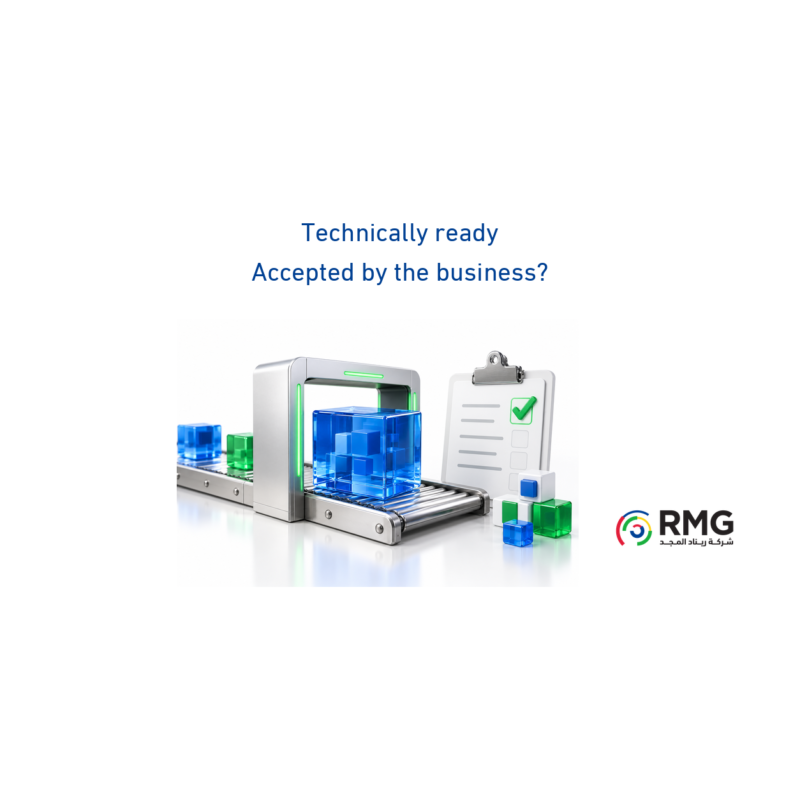
A release may work in development and pass many tests, yet users may find that an approval flow does not match their authority or a report does not answer their question. Handover readiness needs a shared definition across business, development, testing and operations. Ask which capabilities have been demonstrated, which risks remain and who can accept them. This article proposes a practical matrix connecting each requirement to a test, evidence and a decision. No checklist can guarantee defect-free software.
Turn a requirement into a verifiable acceptance case
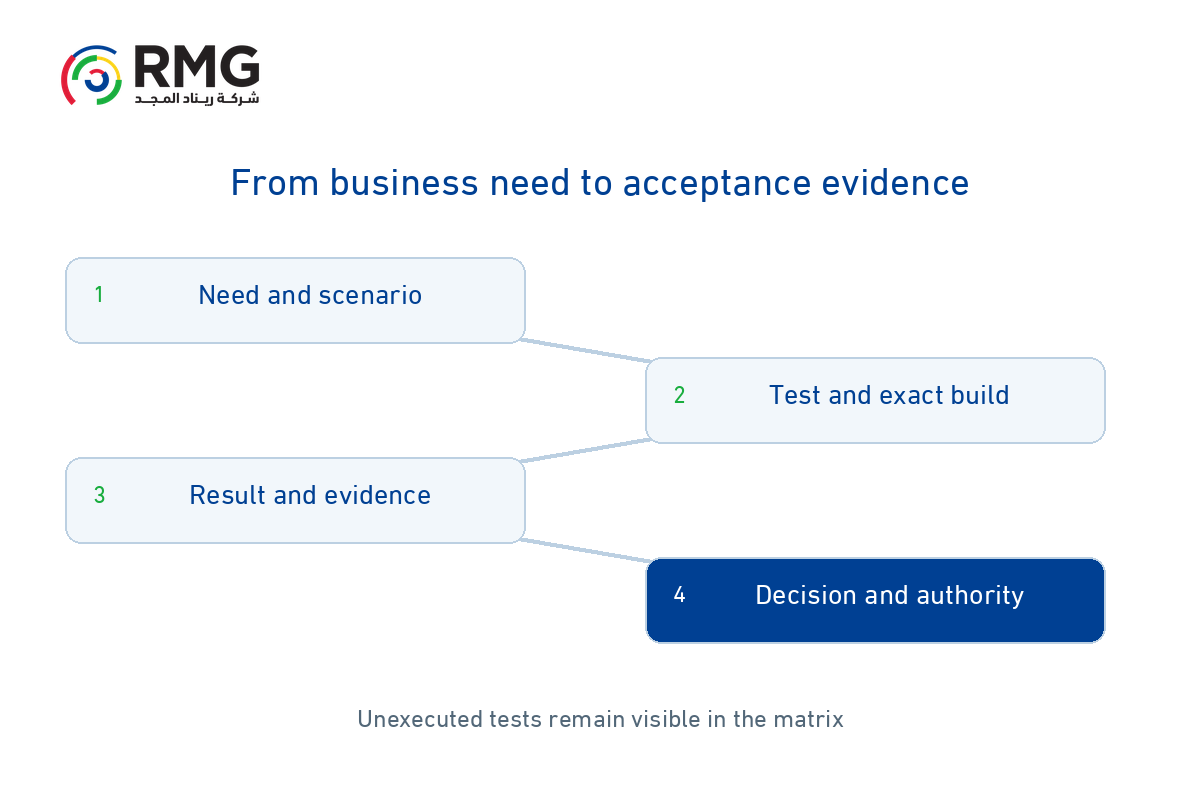
Select important business journeys and identify their owner, expected outcome and boundaries. In a hypothetical purchase request, an Approved status is insufficient: the authorized role must make the decision, the correct amount must reach the record, and an unauthorized user must be unable to approve it. Define inputs, preconditions, steps and expected results before execution, and agree on acceptable evidence. Include rejection, missing-data and duplicate-submission cases. Give each case a stable requirement reference. This is a proposed working approach, not an official test-count standard.
Build a matrix that exposes gaps
Record the requirement reference, business scenario, acceptance criterion, test reference, build and environment, actual result, execution evidence, linked defect and decision owner. Use Not tested or Blocked by external dependency when appropriate; a deadline does not turn an unexecuted test into a pass. Tie evidence to the exact build because an earlier result does not establish the behavior of a changed release. Microsoft explains acceptance criteria, quality gates and expected-versus-actual results. The matrix fields and decision sequence proposed here can be adapted.
Test service boundaries and integrations
Distribute validation across functionality, authorization, integration, performance and recovery according to service risk. Identify tests using a real dependency versus a simulation and name who will confirm behavior against the real connection. Check existing functions affected by the change. An overall pass rate can conceal a failed critical journey. Use authorized test data and control access to logs and attachments. Record known differences between test and production environments, alongside a plan to validate conditions that cannot safely be reproduced.
Make defect decisions explicit
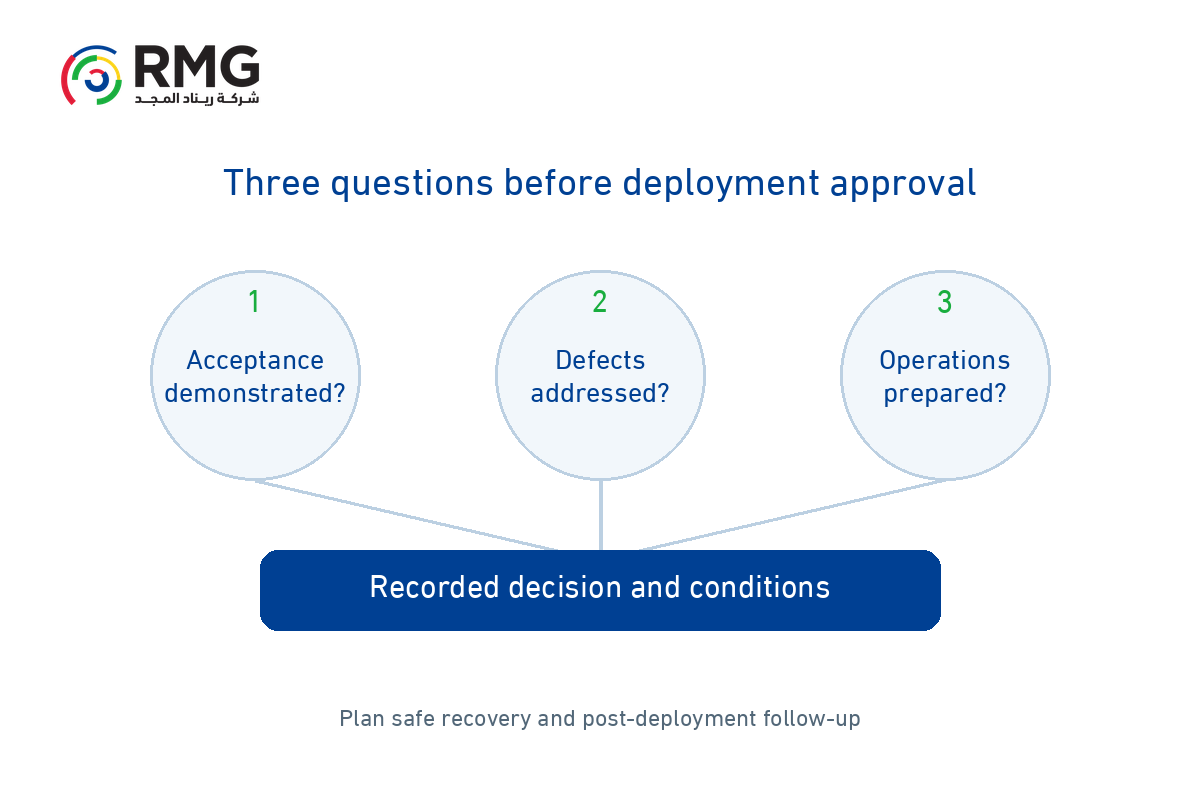
A defect count or a blanket Minor label is insufficient. For each issue, record user impact, reproducibility, any workaround, usage limits and the owner of remediation and retesting. Agree in advance on release blockers and what may be accepted under the applicable authority, policy and contract. An allowed exception should specify its scope, decision owner, due date and action rather than grant blanket acceptance of risk. Business acceptance cannot waive an applicable regulatory or mandatory security obligation.
| Acceptance item | Illustrative example | Evidence and owner |
| Approval authority | Unauthorized role cannot approve | Test record; process owner |
| Data integrity | Correct amount without duplication | Validation result; application owner |
| Operational readiness | Executable deployment and recovery plan | Rehearsal record; operations owner |
Prepare operations before deployment approval
Name the deployment owner, window, monitoring, communication and initial support. Define stop and recovery conditions. Check whether data and configuration changes are compatible with recovery: restoring application files does not necessarily reverse data already changed. Microsoft recommends quality gates, health monitoring and stopping when issues appear, while warning that database rollback can be complex. Document post-deployment validation, retain the previous release and plan data recovery according to the design. Do not promise instant rollback without demonstrating it.
Apply Saudi requirements within their scope
For entities within the scope of ECC–2:2024, control 1-6 addresses security in projects and development, including tests against security requirements, secure integration and pre-release configuration review. Control 2-5-3-2 covers isolation of production networks from development and testing networks. The document identifies government, affiliated entities and critical national infrastructure organizations within its scope; it should not automatically be generalized to every business. Identify other applicable requirements according to sector and data. The proposed matrix is a working tool, not evidence of certified compliance.
Assemble the decision and handover record
Summarize the build and scope, passed and untested requirements, defects and exceptions, technical and security reviews, deployment and support plans, business acceptance owner and deployment authorizer under organizational governance. These may be different roles. Retain dates, evidence references and decision conditions, including when a further change requires retesting. Silence is not acceptance, and a general handover signature cannot replace an informed assessment. After deployment, review agreed indicators and reports and close handover against its recorded conditions.
Start with one release and RMG
Apply the matrix to the important journeys in an upcoming release before expanding it. Identify missing acceptance criteria, evidence and decision ownership, then improve the working process. RMG’s software development page describes requirements gathering, testing, defect tracking, launch and support. Use the gaps to discuss software development, testing and delivery improvement needs with the team. This article does not claim customer results, certifications or guaranteed delivery times. Any engagement scope and terms follow an assessment of the need.