

Blog Body
Start with the service that needs to change
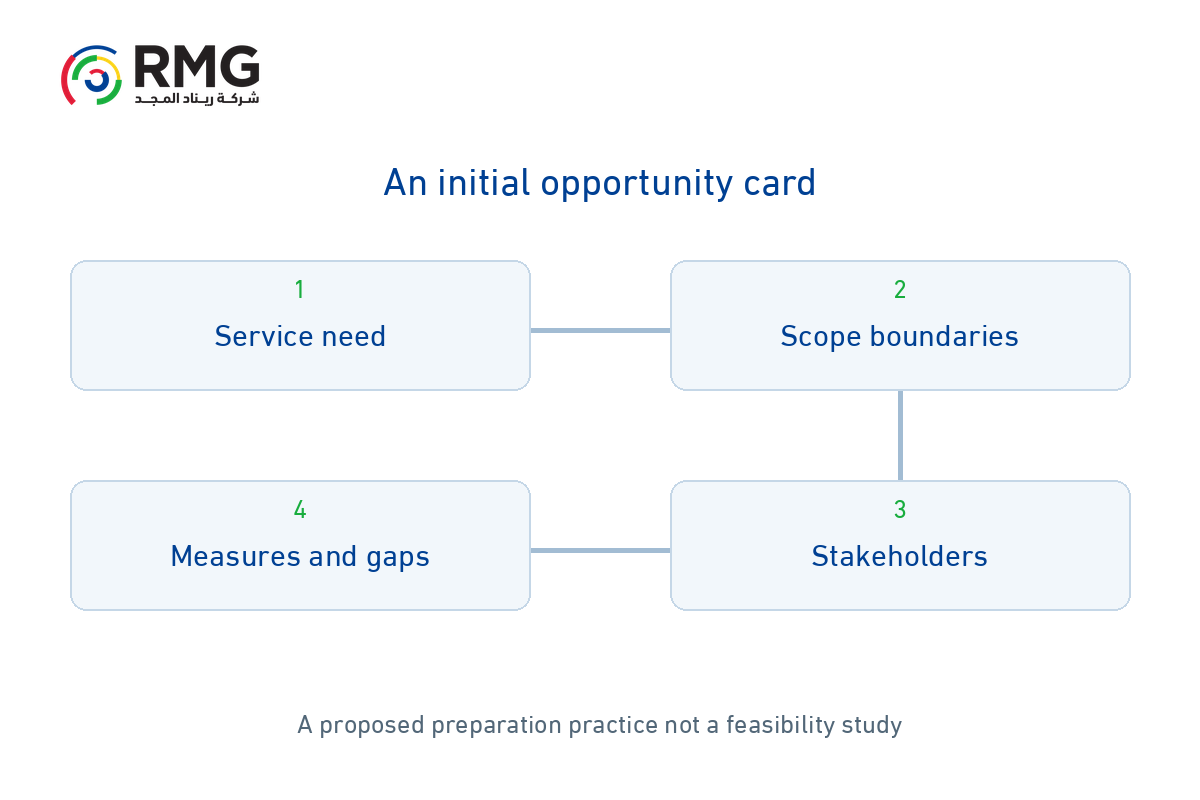
Discussions sometimes begin with a partner or solution before the entity agrees on the problem. Return to the service: who uses it, what is deficient, and what outcome is needed? Market interest does not establish that a partnership is the best route. The proposed opportunity card organizes information for specialist evaluation; it is not a feasibility study, project approval, or procurement authorization.
Describe the baseline with inspectable evidence
Record service demand, the periods covered, available capacity, current performance, and operating constraints. State the source, owner, update date, and definition of each measure. Log missing information with an owner rather than turning an untested estimate into a fact. In a hypothetical facilities service, incoming requests differ from actual users; confusing the two can distort the understanding of need.
Define service boundaries before the structure
State included and excluded activities, locations, users, and interfaces with other services. Distinguish operations from asset development, financing, or maintenance without prematurely selecting contractual allocations. List assets, data, rights, approvals, and external dependencies needing verification. An asset list does not establish authority to transfer it. Ownership, authority, and applicability require specialist review before further action.
Map stakeholders and responsibilities
Identify the service owner, regulators, finance, legal and technical functions, users, and affected groups as appropriate. Record the information each provides, decisions within its authority, and impacts needing assessment. Propose an owner to consolidate the card and resolve inconsistent inputs; this working map does not replace formal governance. A meeting or expression of interest does not approve scope or accept a financial commitment.
Propose service measures rather than activity counts
For each proposed outcome, define the measure, unit, source, reading frequency, and documented baseline if available. A hypothetical example might examine processing time for a complete request or facility availability under an agreed definition, without inventing a target percentage. Record comparability limits. Measures remain preliminary until measurability and approval authority are reviewed; they do not automatically become contractual conditions.
| Card part | Proposed information | Check required |
| Need and scope | Users problem service boundaries | Source and baseline |
| Stakeholders | Owner and relevant functions | Information and authority |
| Measures and gaps | Indicator definition open question | Completion and review owner |
Map stakeholders and responsibilities
Identify the service owner, regulators, finance, legal and technical functions, users, and affected groups as appropriate. Record the information each provides, decisions within its authority, and impacts needing assessment. Propose an owner to consolidate the card and resolve inconsistent inputs; this working map does not replace formal governance. A meeting or expression of interest does not approve scope or accept a financial commitment.
Propose service measures rather than activity counts
For each proposed outcome, define the measure, unit, source, reading frequency, and documented baseline if available. A hypothetical example might examine processing time for a complete request or facility availability under an agreed definition, without inventing a target percentage. Record comparability limits. Measures remain preliminary until measurability and approval authority are reviewed; they do not automatically become contractual conditions.
| Card part | Proposed information | Check required |
| Need and scope | Users problem service boundaries | Source and baseline |
| Stakeholders | Owner and relevant functions | Information and authority |
| Measures and gaps | Indicator definition open question | Completion and review owner |
Keep evaluation questions visible
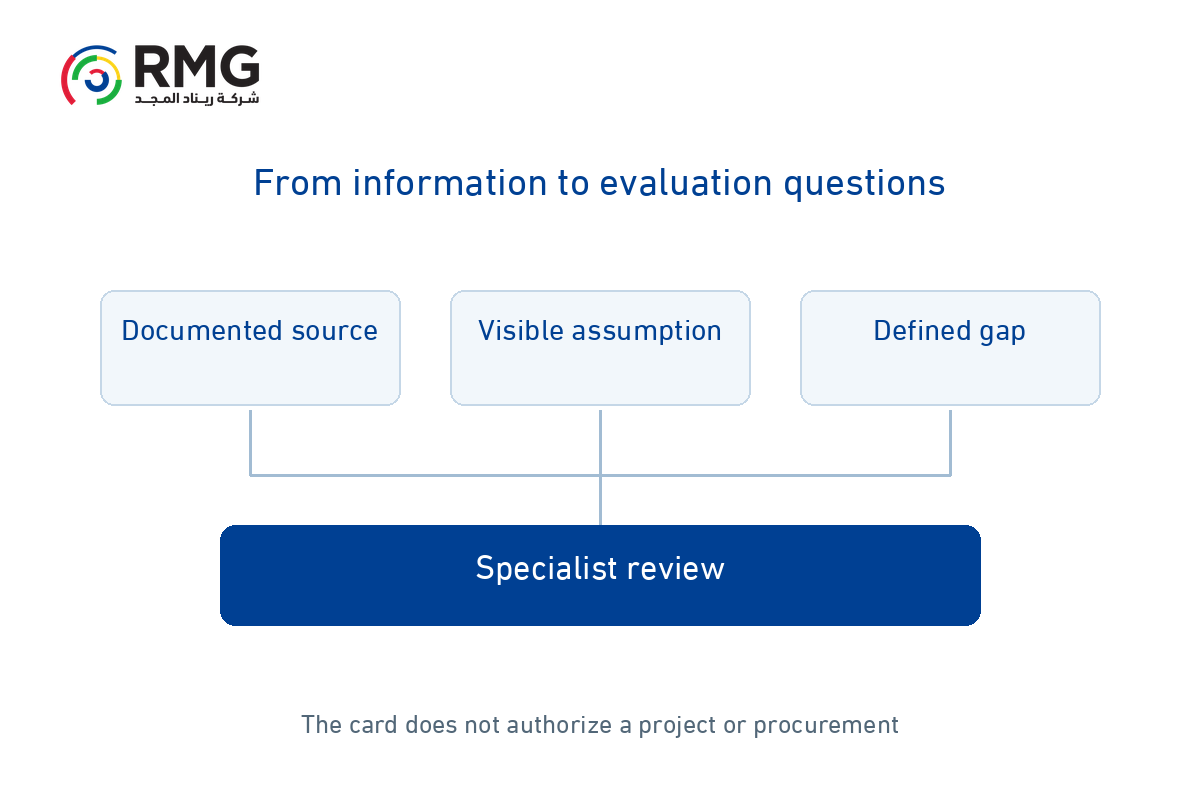
The World Bank reference distinguishes initial screening from detailed appraisal and identifies feasibility, value for money, affordability, and project management considerations. Use these to identify questions requiring study, not to declare the opportunity suitable. Identify evidence needed to compare options, risks, and dependencies with specialists. Assigning a role to the private sector does not necessarily transfer every risk or eliminate public cost and responsibility. [2]
Prepare the card for the applicable review route
Compile the need, scope, sources, gaps, stakeholders, proposed measures, and open questions in a dated version. Separate verified information, assumptions, and decisions needed. Before implementation, the entity should verify the applicable legal route, governance, and current official privatization requirements. This card is a proposed preparation practice, not an official form or substitute for required studies and approvals.
Discuss planning needs with RMG
RMG describes privatization strategy planning and implementation, operating plans, and identifying potential partnership projects. Use the card to discuss organizational needs and missing information before specialist evaluation. Scope depends on the service, authority, and applicable requirements. The card implies no official endorsement, customer result, guaranteed partner attraction, or financial return.