
Blog Body
Start with the question the data must answer
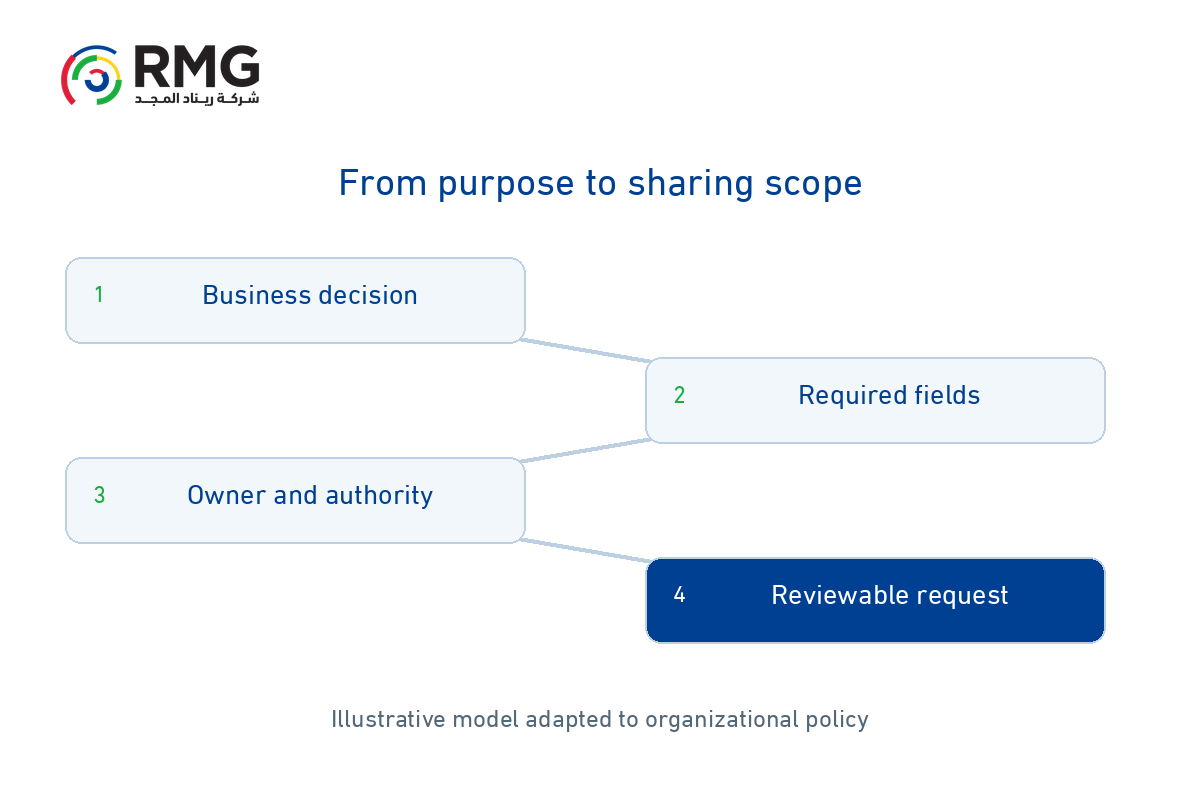
A department may request an entire file because it has not identified the fields it needs. Another may supply it without naming the version or usage limits. Disputes then arise over definitions, updates and corrections. Begin with a specific business decision and identify the data and ownership needed to support it. The proposed record supports internal coordination; being part of one organization does not create unrestricted access.
Translate the need into a defined scope
In a hypothetical example, planning needs overdue requests by service and period. Request date, status and service type may suffice, while names and contact numbers may not support that analysis. Review the selection with the data owner and specialists: a different purpose may require different fields. Record why each field is needed, the time period, the level of detail and whether an aggregate would answer the question.
Create a reviewable request record
Capture the requester and accountable user, purpose and decision, field definitions, source and version, period and refresh needs, authorized users, delivery method, restrictions and review date. Add request status, decision reference and an owner for missing information. These proposed fields support coordination and do not replace any required official form. Avoid putting real sensitive contents into a request record circulated to people who do not need them.
Separate responsibilities before transferring files
The proposed record assigns the business user responsibility for explaining use, the data owner for definitions, provenance and restrictions, and technology for implementing and recording approved access. Data governance, security and privacy specialists participate under organizational authority and applicability. A successful transfer is not approval for another purpose. Name who receives quality issues and who authorizes correction or a replacement delivery so that responsibility does not disappear between teams.
Distinguish national policy from internal procedure
SDAIA’s policy governs sharing government data with requesters within its scope and exceptions. It addresses legitimate purpose, minimization, authorized access and security, and refers to personal data protection requirements where applicable. Inter-entity procedures should not be copied indiscriminately to every internal exchange or private business. Specialists determine applicable requirements; this proposed coordination record does not itself establish a legal basis for sharing.
| Request part | Illustrative example | Clarification needed |
| Purpose | Overdue requests by service | Decision and period |
| Scope | Status date and service type | Definitions and rationale |
| Ownership | Data owner and accountable user | Access decision and review |
Agree definitions refresh and validation
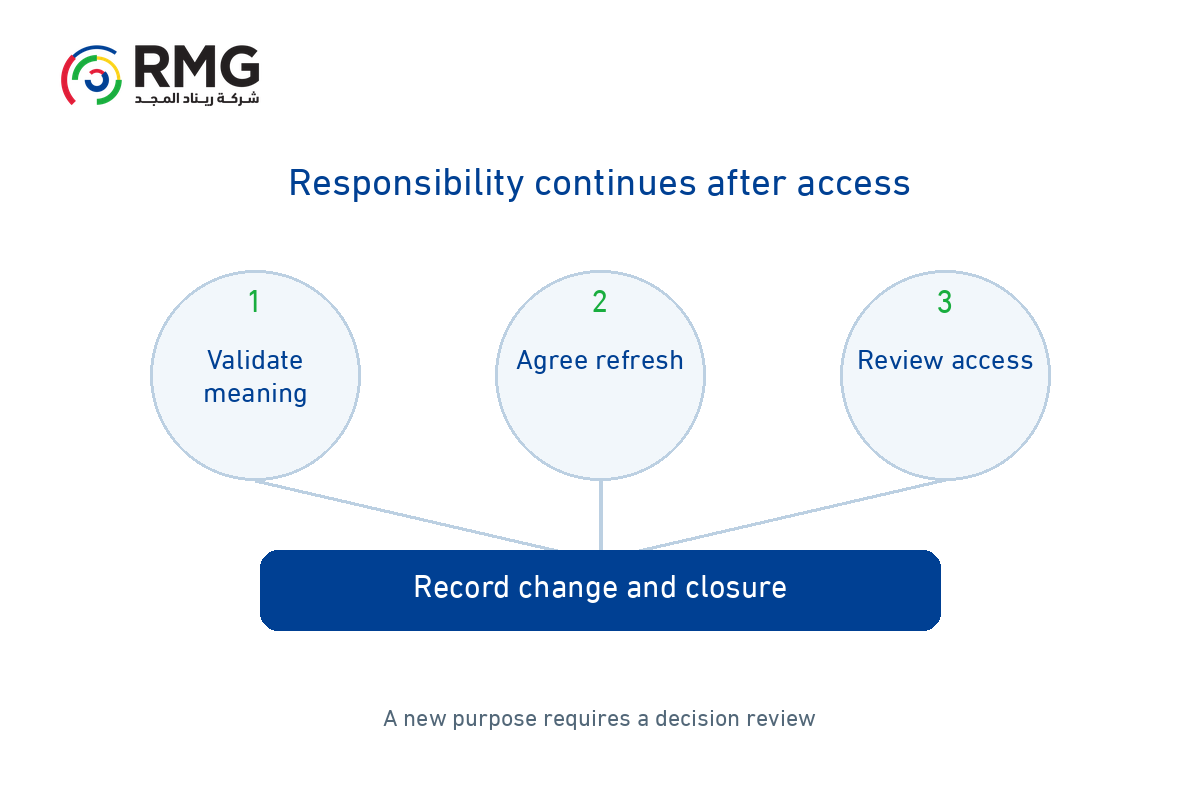
Before use, test an authorized sample against the agreed fields. Check status meanings, dates and measurement units, along with period and version compatibility. Record the latest update and how stale or duplicate records will be identified. Notify users when a definition or source changes before they rely on an invalid comparison. Merely opening a file does not establish fitness for the business question; users need to interpret the contents within their limits.
Review ongoing use and close expired access
Set a date to review continued need and access, and a process for changing purpose or expanding scope. Record who requested and authorized the change and the checks required before implementation. At the end of need, review access and copies under applicable policy and retention obligations. Revoking a link does not necessarily remove every copy. Keep decision evidence in the approved location and define action if the wrong version is used or unauthorized access occurs.
Start with one request and RMG
Apply the record to a current request and identify missing definitions, ownership or decision evidence. RMG’s data office page describes governance, roles, quality, integration and metadata services. Use the identified gaps to discuss data-sharing governance and protection needs. This article claims no customer result, compliance guarantee or unverified capability. Engagement scope follows an understanding of organizational needs and authority.