
Blog Body
Define the work outcome to develop
A training plan can begin with fashionable courses and end with little explanation of their effect on work. Start by asking which outcomes roles must deliver next and which capability currently prevents delivery. Choose a bounded scope such as a project office or digital service team, and agree with work owners on the assessment purpose and use of results. This is a proposed development planning model rather than an employee ranking or automated promotion decision.
Start with roles, not employee names
Define the role outcomes, responsibilities, context and decisions. One person may hold several roles and several people may share one role. This prevents assessment from becoming a broad judgment of an individual or one skills list copied across all job titles.
Select skills and responsibility levels
SFIA connects skills to levels of responsibility and generic attributes rather than theoretical knowledge alone. Choose a focused set linked to real work and define the required level through autonomy, influence, complexity and accountability, not only job grade. The edition used here is SFIA 9, published in October 2024 [2], with responsibility levels checked against the original source [3]. Record the framework edition with each role profile so that assessment definitions remain consistent when the framework changes.
Ask for suitable evidence of practice
Evidence may include a delivered output, a decision the person contributed to or a situation where the skill was applied, supported by manager or expert review. Self-assessment is a useful input, not a final judgment. Collect only what is necessary, protect data and explain its purpose. SFIA distinguishes competency assessment from general performance appraisal and emphasizes methods appropriate to purpose and context [4]. Also record evidence date, currency, scope and reviewer. Missing evidence does not prove absence of capability.
Describe the gap without false precision
Compare required capability with what evidence supports and record confidence and limitations. A gap is not always a training need; it may reflect role ambiguity, missing tools, lack of practice opportunity or insufficient supervision. Priority should connect to outcome importance, timing, risk and alternatives using approved internal rules.
A practical matrix from role to intervention
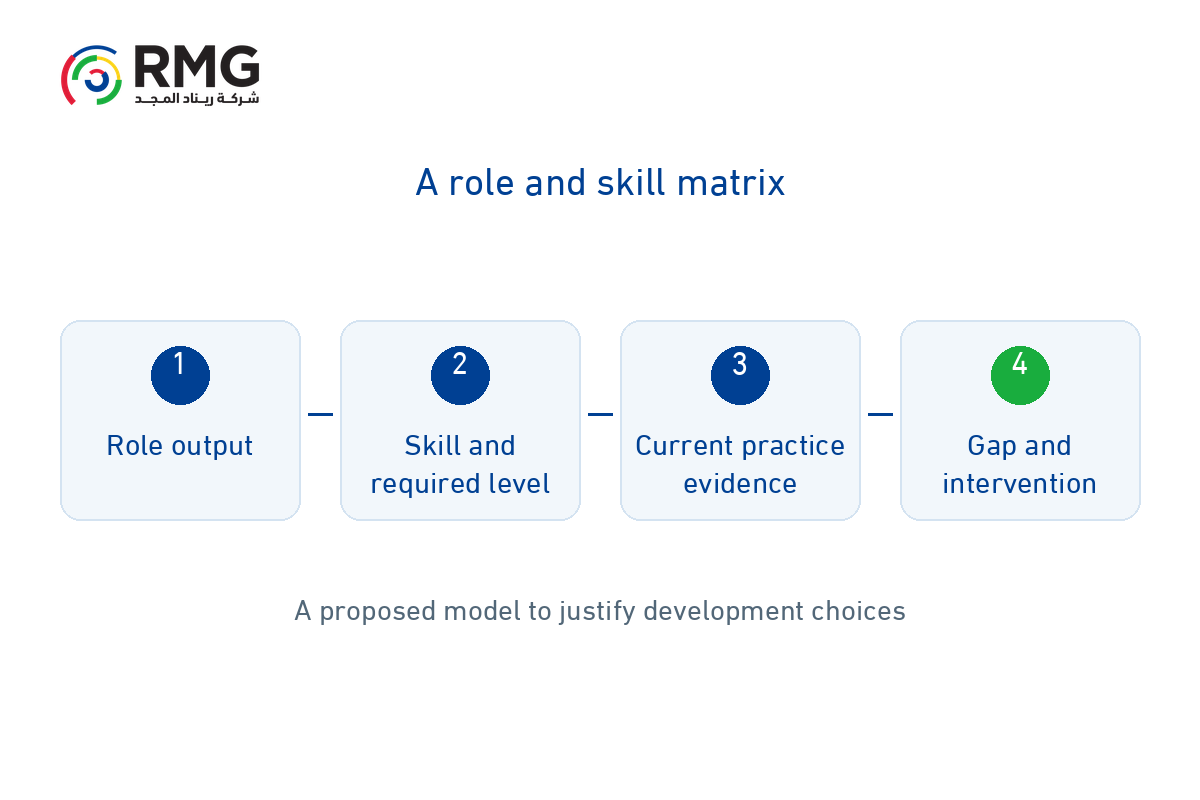
Use one row per role and specific skill, recording the expected output, skill code and framework edition, required level with rationale, evidence-supported capability, descriptive gap, intervention, owner and success evidence. In a fictional example, a service requirements role needs to conduct stakeholder discussions with defined independence, while available evidence shows supervised practice. A short analysis assignment with coaching and output review may fit better than a generic course alone. A specialist selects the skill code and level after reading its description; a job title alone does not establish the mapping.
| Matrix field | Illustrative example |
| Role and output | Analyze service requirements and deliver an agreed specification. |
| Skill and required level | A specialist selects the skill and responsibility level from current SFIA descriptions and records the rationale. |
| Supported practice | A previous output was delivered with supervision; evidence needs review before assigning a level. |
| Gap and intervention | Progressive independent practice with coaching and review. |
| Success evidence | A fresh output meeting agreed criteria after the intervention. |
Choose an intervention that addresses the cause
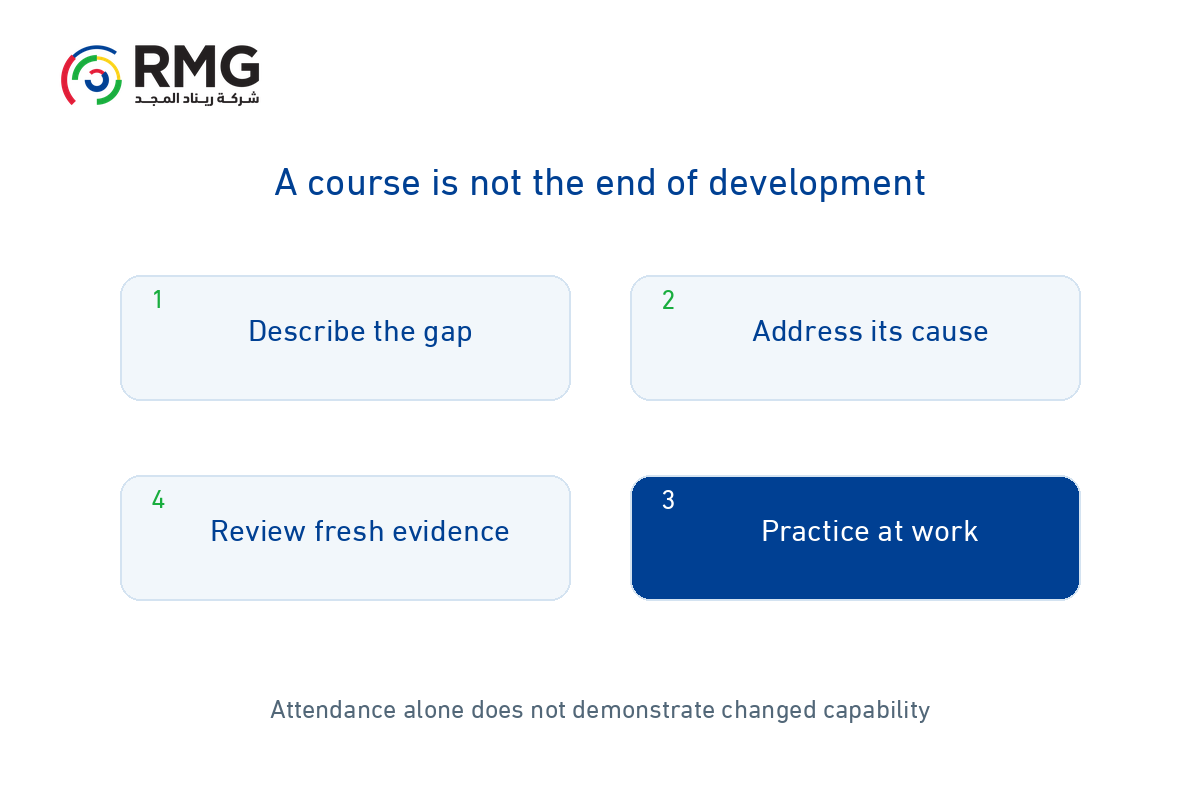
Training may build knowledge or guided practice, while applied capability may require a short assignment, coaching or rotation. Define expected workplace output, application evidence and review date. Course attendance alone does not show that capability transferred to work.
Protect assessment data and limit its use
When skills evidence is linked to individuals, review personal data requirements, purpose, access and retention with the responsible specialist. SDAIA’s minimum data guideline explains the connection between actual need and purpose [5]. Avoid client files or personal data unnecessary for assessment and use redacted work outputs where possible. Give management a suitably aggregated gap summary and provide a way for the individual to explain evidence or correct information. A proposed training choice does not authorize reuse of assessment results for a different purpose without review.
Refresh the matrix as work changes
Roles, tools and priorities change. Review skills profiles when strategy, systems or services change rather than only once a year. RMG presents SFIA services for assessing, designing, managing and developing digital skills. Responsible use starts with clear scope, agreed roles, assessment method and privacy. Start with Rinad Al Majd by defining roles, outputs and assessment methods before creating a course list, then review intervention effects using fresh evidence of practice .