
Blog Body
Good improvement does not begin with a tool, reorganisation or training course. It begins by defining the problem, context, evidence and decision required. This article offers an adaptable operating model for Saudi organisations; it is not an official standard or a substitute for applicable legal and professional requirements.
Start with the observation, not a ready-made solution
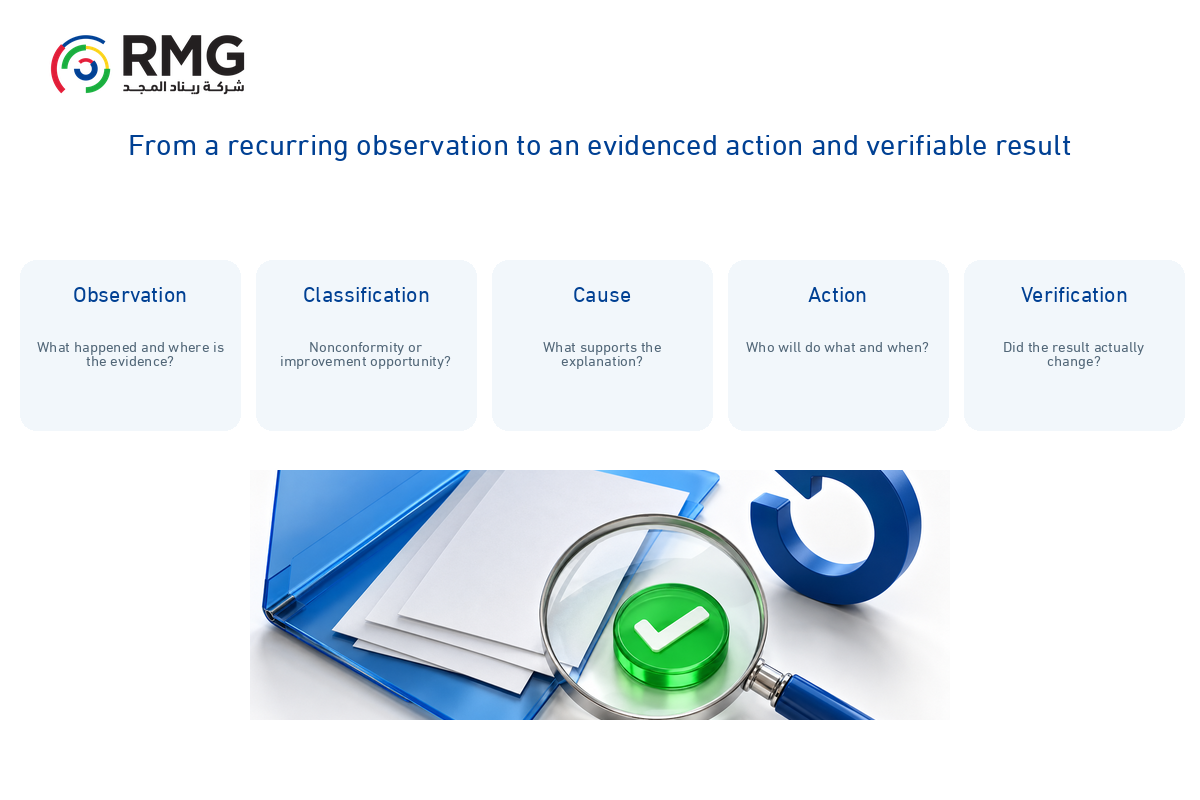
Quality breaks down when audit findings, complaints and performance measures become separate follow-up lists. Write a verifiable observation: expected requirement or outcome, what was observed, evidence source, scope and date. Do not jump to a solution before establishing the problem, or label an impression as a nonconformity without a clear requirement.
Classify the case and set priority
Not every observation is a nonconformity and not every improvement opportunity is urgent. Use approved internal rules that distinguish deviation from a requirement, potential risk and improvement idea. Priority may consider impact, recurrence, breadth and obligations, but weights and thresholds belong to the organization and are not presented as an official standard here.
Analyse causes to the depth evidence supports
The useful question is not who failed, but what conditions allowed recurrence. Review the process, data, roles, tools and hand-offs. A cause may be multiple or uncertain, so record hypotheses, evidence and confidence limits. Separate immediate containment from action aimed at the supported cause.
| Field | Practical question |
| Observation | What happened and where is the evidence? |
| Classification | Nonconformity or improvement opportunity? |
| Cause | What supports the explanation? |
| Action | Who will do what and when? |
| Verification | Did the result actually change? |
Turn the decision into an improvement card
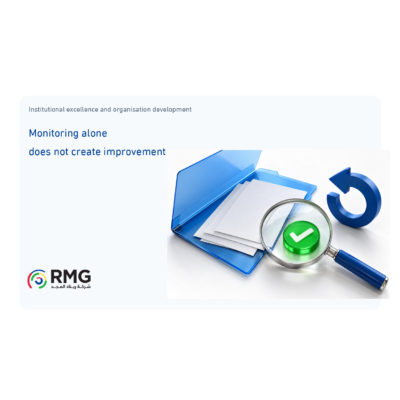
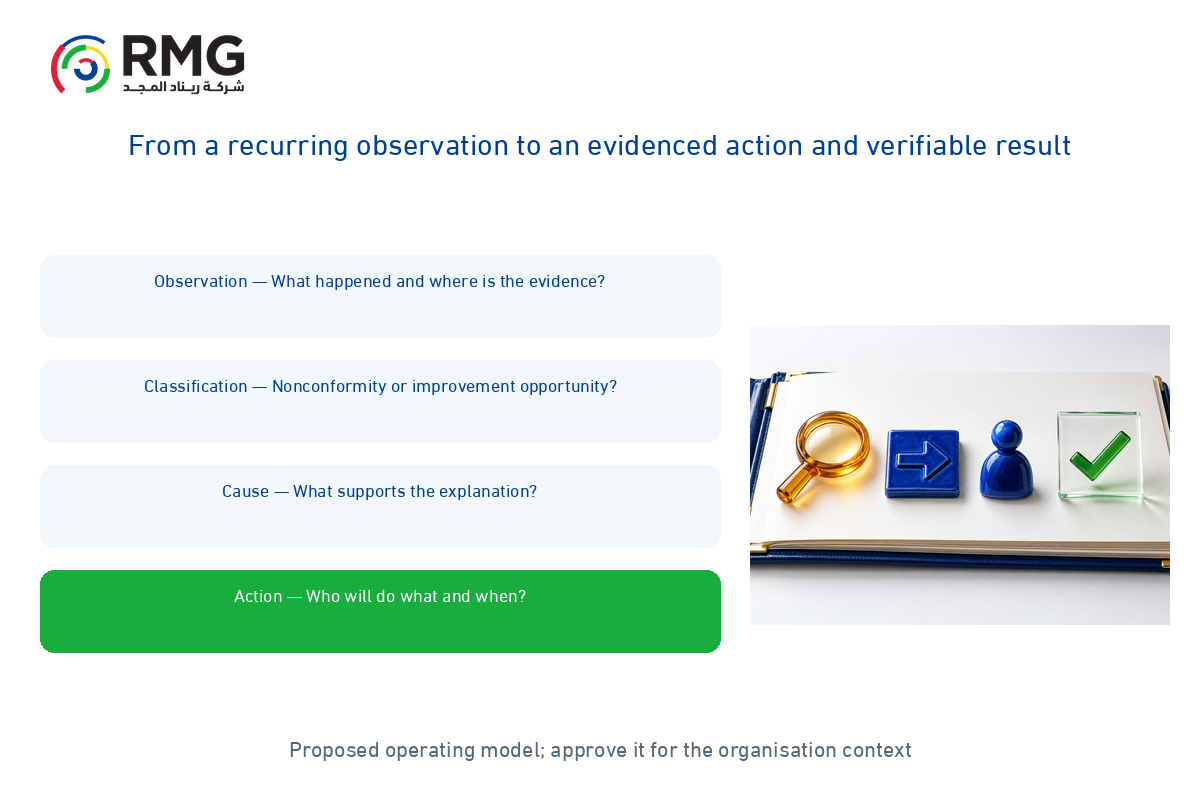
The proposed card records the observation, classification and owner; action; delivery owner; approved due date; required approval or resources; completion evidence; and effectiveness test. Completing a task is not the same as confirming improvement: the action may finish without changing the measure or experience.
Verify effectiveness and retain learning
Define success evidence, review timing and who can close or reopen the case before implementation. Preserve decisions and changes, then reflect learning in procedures, training or system configuration. ISO describes quality management as a dynamic system of continual improvement rather than a temporary campaign.
How can Ajwad support the flow?
RMG describes Ajwad as bringing quality, risk, business continuity, internal audit, nonconformities and corrective actions into one platform. Integration helps when it preserves the link from observation to evidence, action, ownership and verification. A platform alone does not guarantee decision quality; authorities, data and closure rules still need definition.