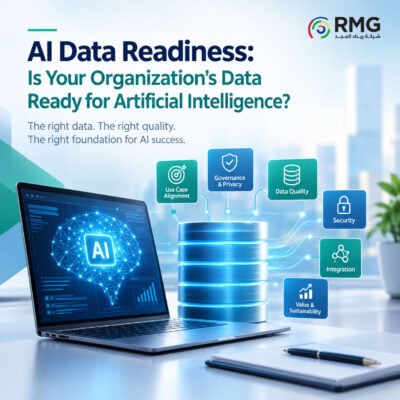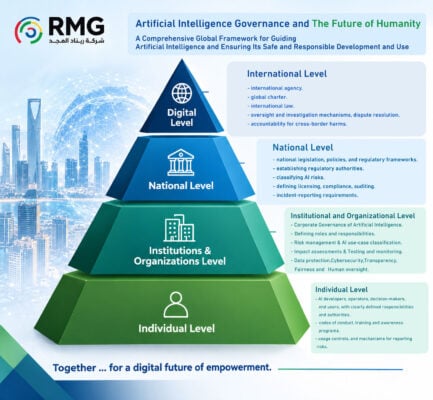


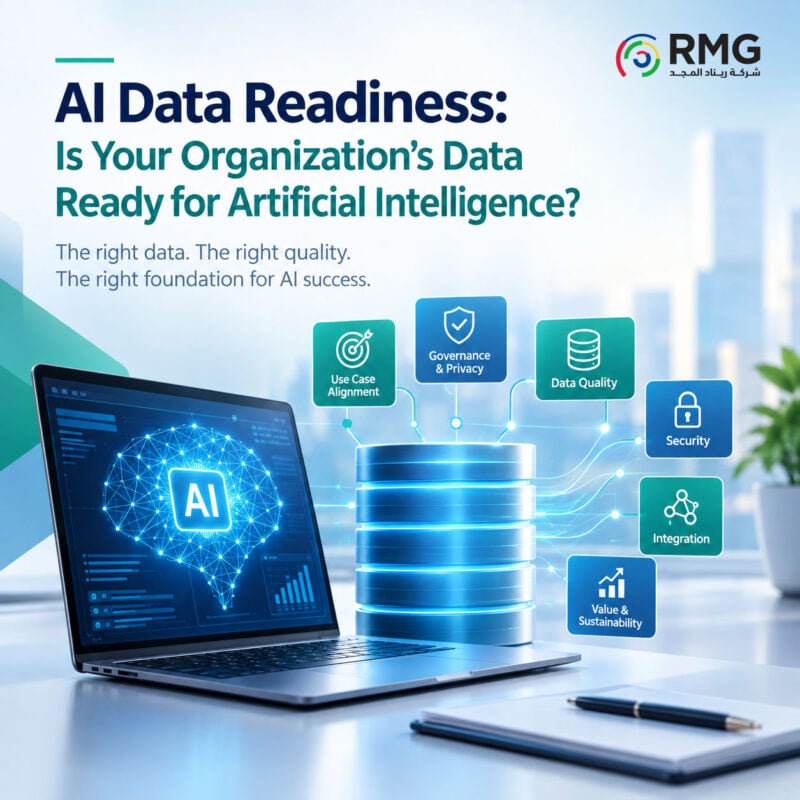
The success of an AI project does not begin with selecting a model or an AI platform; it starts with a much more fundamental question: Is the available data genuinely suited for the target use case?
Many enterprises and government entities identify a promising use case and rush into technology selection, prototyping, or platform procurement. However, once implementation begins, critical unresolved questions surface: Where does the data reside? Who owns it? Are we legally permitted to use it? Is it sufficiently complete and up-to-date? Does it accurately reflect real-world scenarios? Can it be accessed and operationalized securely and sustainably?
Addressing these questions upfront highlights the critical importance of evaluating AI Data Readiness before committing significant development investments.
In this context, “data readiness” is defined practically: the degree to which available data can effectively support a specific AI use case across business, operational, quality, governance, privacy, security, and technical integration dimensions.
Data is never absolutely “AI-ready.” A dataset might be excellent for generating statistical reports but entirely inadequate for training a predictive model. Similarly, unstructured documents might be perfectly legible to humans but require extensive structuring, classification, and access control management before powering a Retrieval-Augmented Generation (RAG) smart assistant. This aligns with standard national data management frameworks (such as those outlined by the NDMO), which define data management as a system of policies and practices designed to govern data, maximize its value, and protect sensitive personal information.
Why Do AI Projects Fail Despite Massive Data Volumes?
The bottleneck is rarely the volume of data; it is the data’s relevance and reliability for the specific task the AI system will execute.
An organization might possess millions of records, but if field definitions have drifted over the years, categorization schemas are inconsistent, or the authoritative source system is unidentified, sheer volume offers no advantage. In other instances, data might be technically sound but remain unusable due to unresolved privacy constraints, classification limitations, or access rights.
The right question is not, “Do we have data?” but rather, “Do we have the right data, at the right quality, with the appropriate governance and permissions, for this specific use case?”
International standards, such as the ISO/IEC 5259 series (Data quality for analytics and machine learning), emphasize that data quality must be managed and measured throughout its lifecycle, rather than treated as a one-off pre-training cleansing step. (Specifically, ISO/IEC 5259-2 covers quality models and metrics, 5259-4 addresses quality processes, and 5259-5 focuses on quality governance).
Start with the Use Case, Not the Data Warehouse
A common pitfall is launching massive “enterprise-wide data preparation” initiatives before defining priority use cases. The most pragmatic approach is to let the use case drive the data requirements.
The data prerequisites for a transaction-delay prediction model differ drastically from those needed for an internal enterprise knowledge assistant or a computer vision system:
- Predictive Models require historically representative data, real-time variables available at the moment of prediction, and reliable historical outcomes (ground truth) for the model to learn from.
- Knowledge Assistants (RAG) require authoritative, up-to-date documentation, clear reference sources, granular access controls, and citation capabilities.
- Computer Vision prioritizes image resolution, lighting diversity, environmental variations, and highly accurate bounding-box annotations over sheer file count.
The use-case charter must be the starting point for any readiness assessment: What decision are we supporting? Who is the end-user? What is the expected output? What is the risk/harm of a false prediction? What specific data points are mandatory to generate this output?
8 Practical Dimensions for Assessing AI Data Readiness
Organizations must transition from subjective impressions to structured assessments. The following framework outlines eight operational dimensions for evaluating data readiness:
| Dimension | Core Assessment Question | Required Evidence / Artifacts |
| 1. Use Case Relevance | Does the data contain the actual information needed to build the solution and measure its outcome? | Variable mapping to requirements, target variable definition, required historical timeframe. |
| 2. Availability & Accessibility | Where does the data reside, and can it be ingested systematically? | Source system inventory, data owners, API/integration interfaces, extraction mechanisms. |
| 3. Data Quality | Is the data sufficiently complete, valid, consistent, and timely for the specific use case? | Data profiling results, quality rules, error logs, established quality baselines. |
| 4. Representation & Labeling | Does the data reflect real-world scenarios? Are labels reliable (for supervised learning)? | Class distribution, edge cases, inter-annotator agreement, bias analysis. |
| 5. Metadata & Data Lineage | Do we understand what each element means, its origin, and its transformation history? | Data dictionaries, data catalogs, system of origin, data lineage maps, version history. |
| 6. Governance & Privacy | Is the processing purpose clearly defined and compliant with applicable regulations? | Data classification levels, usage policies, legal basis for processing, retention periods, access approvals. |
| 7. Security & Protection | How will data be secured during transit, storage, and processing? | IAM (Identity & Access Management), encryption standards, logging/monitoring, hosting environment, third-party risk management. |
| 8. Operational Sustainability | Will the data continue to flow with the same quality post-deployment? | Designated data owner, source system SLAs, continuous quality monitoring, drift/change management procedures. |
Data Quality: “Fit for Purpose” Over “Perfect”
Not every AI use case requires mathematically flawless data. The objective is to achieve quality that is fit for purpose and aligned with the accepted risk appetite.
Quality metrics (e.g., completeness as the ratio of populated critical fields, or validity as adherence to business rules) should be tailored to the context. A missing field in 2% of records might be negligible for a high-level trend analysis, but disastrous if that field dictates a sensitive automated decision. This context-aware approach shifts the narrative from a generic “data cleansing project” to a value-and-risk-driven data quality ecosystem.
Metadata & Data Lineage: Preventing Data Leakage
Evaluating data readiness goes beyond locating a table with dozens of columns; you must understand the semantic meaning of those columns. Does “Closure Date” mean the date the service was rendered, the date the ticket was closed in the CRM, or the date the record was last modified? Did this definition change during a legacy system migration?
This underscores the necessity of metadata management, data dictionaries, and data lineage. Proper metadata provides the vital context required to understand data relationships and usage risks.
In machine learning, this context is crucial for identifying Data Leakage—a critical flaw where a model is inadvertently trained on variables that contain future information (information that would not be available in a real-world, real-time prediction scenario). Models with data leakage show stellar performance during testing but fail catastrophically in production.
Integrating Privacy and Data Classification
For projects involving personally identifiable information (PII) or sensitive data, privacy cannot be relegated to a post-development checklist.
Compliance with frameworks like the Saudi Personal Data Protection Law (PDPL) and SDAIA’s data classification policies requires early intervention. The readiness assessment must answer: Does this involve personal data? What is the explicit processing purpose? Can we operate on a minimized subset of fields rather than the full record? Will the data leave the enterprise perimeter? What are the mechanisms for data masking, anonymization, or automated deletion?
Addressing a single compliance aspect does not guarantee holistic compliance; organizations must systematically map all relevant regulatory requirements to their specific architecture.
Cybersecurity is Inseparable from Data Readiness
Data can be of pristine quality but housed in a legally or architecturally non-compliant environment. Cybersecurity frameworks, such as the Saudi National Cybersecurity Authority’s Data Cybersecurity Controls (NCA DCC-1:2022) and Cloud Computing Cybersecurity Controls (CCC), mandate baseline protections across the data lifecycle.
A readiness assessment must validate secure data pipelines into the AI training or inference environments, strict Role-Based Access Control (RBAC), sovereign hosting requirements, audit logging, and secure third-party integrations.
Hypothetical Scenario: Automating Citizen Requests
Consider a government agency aiming to build an NLP model to automatically classify and route incoming citizen requests.
They possess 100,000 historical records spanning two years. While this volume seems sufficient, a readiness assessment reveals critical gaps: many requests lack a final resolution tag, categorization labels changed mid-year, routing reasons were overwritten during escalations, and free-text fields contain unmasked PII.
The correct decision is to halt model training. Instead, the team must first standardize the category taxonomy, define the “ground truth” labels, establish masking pipelines for PII, and curate a clean, chronologically split dataset to prevent data leakage. Once a localized Proof of Concept (PoC) meets pre-defined accuracy thresholds without demographic bias, and security protocols are validated, the project can safely transition to a pilot phase.
This assessment prevented the organization from blindly trusting “100,000 records” as an automatic green light.
When Is Data Truly “Ready”?
Readiness is rarely a binary score. It is best categorized into three tiers:
- Ready: Critical data is accessible, semantically clear, meets quality thresholds for the specific purpose, complies with governance/privacy mandates, is technically secured, and has a defined owner ensuring sustained pipelines.
- Conditionally Ready: Identifiable gaps exist but can be remediated within a clear timeframe (e.g., documenting missing metadata or deploying a specific data quality rule prior to the PoC).
- Not Ready: Fundamental roadblocks exist (e.g., core variables are missing, historical outcomes are untracked, legal usage is blocked, or security risks are unmitigated).
A “Not Ready” verdict is not a project failure; it is one of the most valuable, cost-saving outcomes of a readiness assessment.
Tracking Readiness via KPIs
Once an initiative begins, organizations should track readiness via targeted KPIs tied directly to the use case. Metrics might include:
- Completeness % of critical features.
- Data quality rule pass rate.
- Data pipeline latency/freshness.
- Percentage of data assets documented in the enterprise catalog.
- Mean Time to Resolve (MTTR) for data quality incidents.
For Generative AI / RAG solutions, metrics shift toward document recency, verified source coverage, and access control parity.
How Renad Al Majed (RMG) Accelerates AI Data Readiness
Renad Al Majed (RMG) bridges the gap between Data Governance and AI Solution Development. Through comprehensive data management services (governance, metadata, catalogs, master data management, and data quality) and strategic partnerships like the one with Informatica, RMG equips organizations in the Saudi market with enterprise-grade data foundations.
On the AI front, RMG provides end-to-end development for custom AI use cases and infrastructure consulting. This integrated approach allows enterprises to smoothly transition from use case ideation and data gap analysis to realistic remediation roadmaps, PoCs, and full-scale deployment.
Before asking which AI model is best, ask first: Is our data truly prepared to drive the decisions we expect AI to make?