

Blog Body
Do you own the data, or does it own you? In the algorithmic race, data ethics emerges as the safety compass protecting your organization’s reputation from AI pitfalls. Discover how Renad Al-Majd (RMG) transforms ethical commitment into a strategic shield that builds customer trust and ensures responsible digital growth aligned with global and national values.
The Digital Age Charter: Why Does Data Ethics Lead the Scene?
As we enter the era of full digital sovereignty, data is no longer just numbers in databases; it reflects identities, behaviors, and life-changing decisions. Here, data ethics arises as a value framework governing how this information is collected, processed, and shared. Today, corporate ethical responsibility goes beyond mere legal compliance; it is about fairness, transparency, and integrity in algorithmic use. At Renad Al-Majd (RMG), we believe that innovation lacking ethics is fragile, and that organizations putting “the human” at the heart of their digital strategy are the ones that will lead the future.
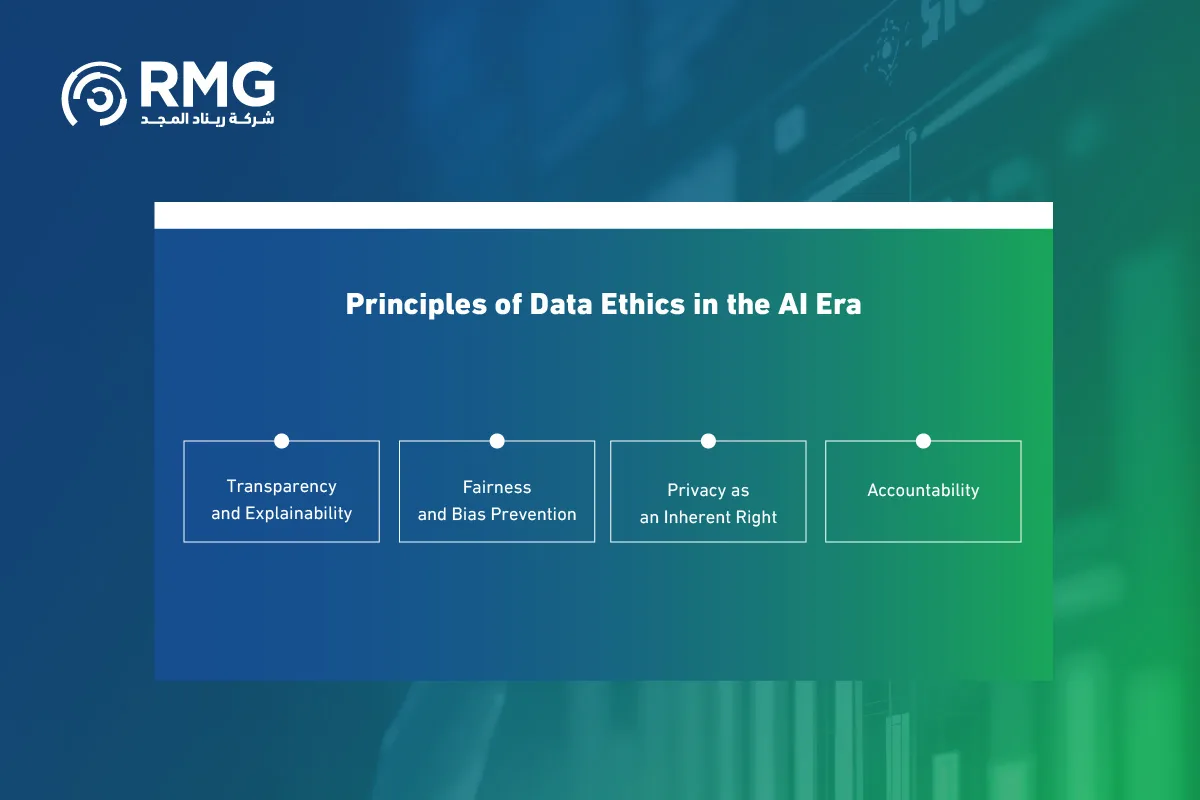
Principles of Data Ethics in the AI Era
To build an honest digital ecosystem, data ethics relies on core pillars that we establish at RMG through our consultancy services:
- Transparency and Explainability: The organization (and the client) must understand how the AI reached its decision.
- Fairness and Bias Prevention: Ensuring algorithms do not discriminate against a specific group based on race, gender, or social background.
- Privacy as an Inherent Right: Moving beyond “data protection” to “respecting privacy” in every technological touchpoint.
- Accountability: Identifying the party responsible for the outputs generated by Big Data systems.
Applying these principles is what gives data ethics its true power in protecting both the corporate entity and society.
The Risks of Neglect: How the Absence of Ethics Destroys Corporate Reputation
Neglecting data ethics can lead to disasters that PR alone cannot fix. Scandals related to data leaks or blatant algorithmic bias can lead to the collapse of customer trust and a decline in market value. In a conscious environment like the Saudi market, customers expect national institutions to protect their data with high ethical awareness. At RMG, we help you preempt these risks by building internal “Ethical Charters” ensuring every technical project is vetted from a value perspective before launch, turning ethics into a sustainable competitive advantage.
The Difficult Balance: Between Data Monetization and Privacy Respect
The greatest challenge in data ethics is balancing the desire to exploit data for profit with an individual’s right to confidentiality. AI feeds on data—the more data, the more accurate the predictions—but at what cost? The solution provided by RMG lies in “Privacy by Design”, where ethical standards are integrated into the early development stages of systems, allowing for innovation without violating digital boundaries.
Data Ethics and Compliance with the Personal Data Protection Law (NDMO)
Data ethics cannot be separated from the Saudi legal framework managed by the Saudi Data and AI Authority (SDAIA). While the Personal Data Protection Law (PDPL) sets the legal rules, ethics fill the human gaps that rigid texts might not cover. At RMG, we merge the two: ensuring full legal compliance while adding the layer of data ethics that makes your organization a model of responsible “Digital Citizenship,” aligning with the values of Saudi Vision 2030.
The Role of Leaders in Embedding an Ethical Data Culture
Building an organization committed to data ethics starts from the top. Leaders set the ethical tone by supporting transparency and allocating resources for data governance. At RMG, we provide executive workshops for decision-makers to help them understand the philosophical and practical dimensions of data ethics. When a leader realizes that digital integrity is the true guarantee of sustainability, ethics become an integral part of the corporate culture, not just a file in the compliance department.
The Future of Ethics in the Time of “Generative AI”
With the rise of GenAI, data ethics has become more complex and critical. Issues of intellectual property for machine-generated content and the risks of Deepfakes require doubled ethical vigilance. Our role at RMG is to equip your organization with advanced “Ethical Radars” capable of monitoring new value-based threats. We help you draft AI usage policies that ensure your outputs remain honest, authentic, and fully accountable to society.
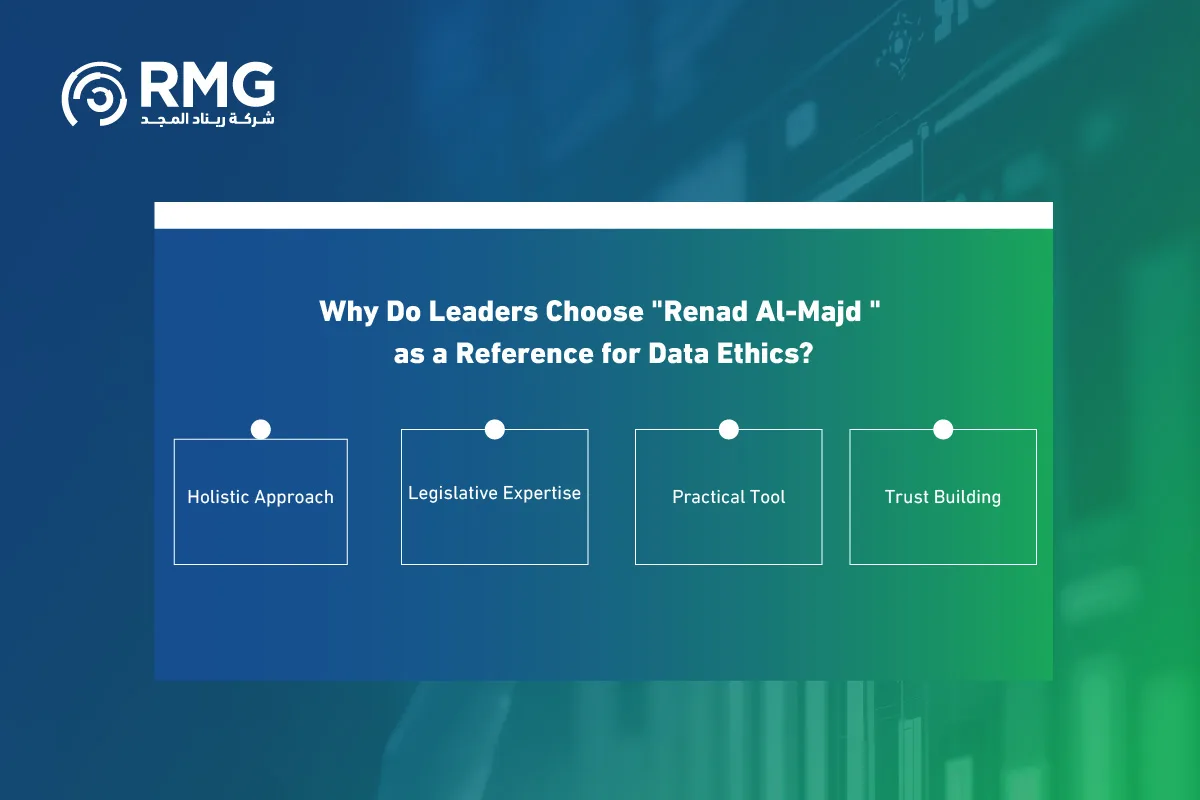
Why Do Leaders Choose “Renad Al-Majd” as a Reference for Data Ethics?
At RMG, we are not just technical experts; we are consultants who believe technology must serve human values. Our distinction in data ethics stems from:
- Holistic Approach: Linking technical governance with social responsibility.
- Legislative Expertise: Deep understanding of Saudi regulations and international standards (like GDPR).
- Practical Tools: Providing applicable frameworks rather than just slogans.
- Trust Building: Helping you turn commitment to data ethics into a powerful marketing asset that attracts conscious customers.
Start securing your organization’s ethical future today with RMG. Building a good digital reputation takes years, but losing it due to a single ethical error takes seconds. We invite you to join the elite organizations adopting data ethics as a core business methodology. Contact us today to assess your digital ethical maturity and let’s build a fortress of trust and integrity together.
FAQ About Data Ethics
What is the difference between data security and data ethics?
Security focuses on “how” to protect data from breaches, while ethics focuses on “whether” it is right to collect or use it in a certain way.
Does ethical commitment reduce AI’s ability to innovate?
On the contrary, ethics ensures sustainable innovation by reducing legal and social risks, opening broader horizons for public acceptance of technology.
How can “algorithmic bias” be monitored in our data?
Through specialized analytical tools provided by RMG that test system outputs against diverse samples to ensure neutral results.
Is data ethics legally binding in Saudi Arabia?
Many aspects have become mandatory through the Personal Data Protection Law (PDPL), and the rest represent best practices that bolster the entity’s ranking locally and internationally.
How does RMG contribute to spreading awareness of data ethics?
By providing specialized training programs for employees and developers to ensure ethics are part of the development lifecycle of any digital product.