

Blog Body
Looking for a comprehensive robot definition? In this guide, discover the concept of robots, their types, and their role in automation and digital transformation to achieve goals. Saudi Vision 2030 With solutions RMG.
The world is witnessing an unprecedented digital revolution known as the Fourth Industrial Revolution, where automation and smart systems have become the cornerstone of the development of infrastructure for institutions and government agencies. At the heart of this transformation is a term that resonates across all technical and economic corridors, namely “robot.” Understanding the definition of a robot is no longer a cognitive luxury, but a strategic necessity for leaders and decision-makers in Saudi Arabia and the region, seeking to adopt the latest technologies to increase operational efficiency.
In this lengthy and comprehensive article, we’ll dive deep into the technical and practical concept of robotics, how these intelligent machines can reshape the future of business, and how success partners like RMG can effectively localize these technologies.
What is the definition of a robot?
When we talk about the definition of a robot, we are not just talking about a mechanical machine that moves, but an integrated system that combines engineering, programming, and data.
A robot can be defined as a programmable mechanical or virtual machine, designed to perform a series of complex tasks automatically or semi-automatically, with precision and speed often beyond human capabilities. A robot relies on receiving data from the surrounding environment through sensors, processing it through control systems, and then taking a physical or digital reaction via actuators.
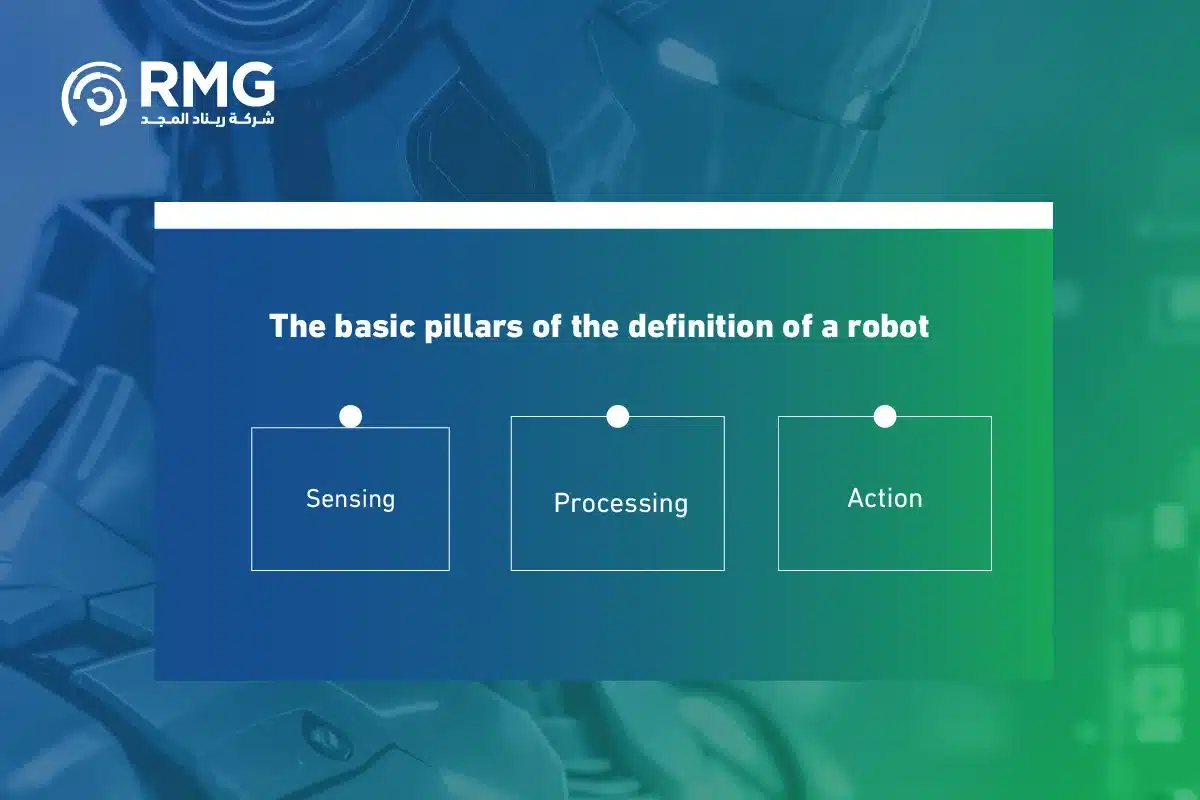
The basic pillars of the definition of a robot:
To understand the term more deeply, a machine must have three main elements to fall under this definition:
- Sensing: The ability to perceive the surrounding environment (light, heat, sound, distances).
- Processing : The presence of an electronic “brain” that analyzes data and makes decisions based on pre-programmed algorithms or artificial intelligence.
- Action : The ability to move mechanical parts or execute numerical commands to change something in the surrounding environment.
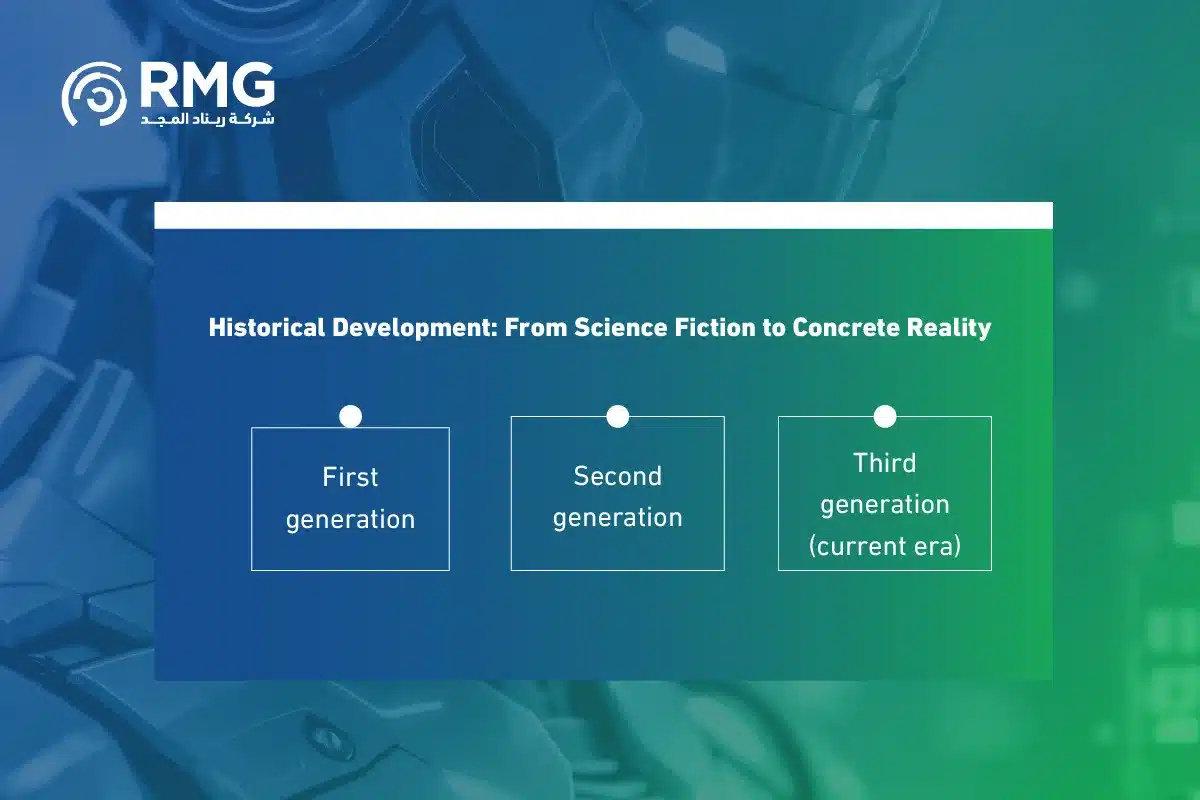
Historical Development: From Science Fiction to Concrete Reality
The definition of a robot in its current form did not emerge suddenly , but went through many historical stages that shaped its current identity. The origins of the word go back to the Czech play “R.U.R.” by Karl Čapek in 1920, where the word “robot” is derived from the Czech word “Robota,” meaning “hard labor” or “forced labor.”
- First-generation: Simple industrial robots with mechanical arms that perform pre-defined repetitive tasks without sensing the environment.
- Second generation: the emergence of robots with rudimentary sensors and limited adaptability.
- Third generation (current era): intelligent, IoT-connected, machine learning-capable robots that work alongside humans (Cobots).
The main components that make up the structure of the robot
To introduce the definition of a robot from an engineering perspective, it must be broken down into its core components that work in perfect harmony:
- Sensors: They serve as the senses of the robot (cameras, lidar sensors, thermal sensors).
- Actuators : These are the muscles that convert electrical energy into mechanical motion.
- Control System: The mastermind, usually a small computer or logic controller (PLC).
- Power Source: Batteries or direct electricity that give life to the system.
- Structure : The external body designed to fit the robot’s function and workplace.
Classifications and Types of Robots in the Modern Business Environment
The definition of a robot expands to include a wide range of types that serve different sectors, especially those of interest to government agencies and major companies in Saudi Arabia:
- Industrial Robots
They are most common, and are used in factories for assembly, welding, and plating processes. They are characterized by high strength, precision, and the ability to work in hazardous environments.
- Service Robots
Designed to assist humans in non-industrial tasks. Includes cleaning robots, hotel and hospital reception robots, and robots used in the logistics sector.
- Collaborative Robots (Cobots)
It represents a leap in the definition of the modern robot; it is designed to work alongside human employees in a shared workspace safely, to boost productivity without replacing the human element.
- Medical Robots
It is used in microsurgery (e.g., da Vinci), rehabilitation, and in-hospital drug delivery, which increases the quality of health care.
- Software Robots (RPA)
Although it does not have a physical body, it falls under the definition of a robot in the context of automation. It is software that simulates the interaction of humans with digital systems to carry out repetitive office tasks, and it is a vital area for digital transformation in ministries and agencies.
The Fundamental Difference Between Robot and Artificial Intelligence (AI)
Many people confuse the definition of robot with the definition of artificial intelligence, and to clarify the matter to the authorities concerned with technical development:
- Robot: It is the “body” or tool that performs the action in the real world. A robot can be “stupid” (only executing specific instructions).
- Artificial Intelligence: It is the “mind” or program that can learn and analyze.
When we combine the two, we get intelligent robots capable of making autonomous decisions, such as self-driving cars or robots that recognize faces in security systems.
The Importance of Adopting Robotics Technology in Light of the Kingdom’s Vision 2030
Seeking to define and understand robots in depth is the first step towards achieving the goals of Vision 2030, which focuses on a thriving digital economy and a vibrant society.
- Enhance government efficiency: The use of robots in service automation reduces bureaucracy and speeds up procedures.
- Industry localization: Industrial robotics supports the “Made in Saudi Arabia” program by increasing production capacity and reducing cost.
- Occupational safety and health: Robots taking on hazardous tasks in sectors such as oil and gas and mining protects human lives.
- Smart Cities (NEOM and The Line): These mega projects are entirely based on the definition of advanced robotics and autonomous systems for infrastructure management.
Ethical and Legal Challenges and Considerations
As the use of robots expands, challenges arise for organizations to be aware of, such as:
- Cybersecurity: Protect networked robots from hacking.
- Legal Liability: Who is responsible if the robot makes a mistake?
- Workforce rehabilitation: Train employees to handle new technologies instead of being afraid of being replaced.
RMG’s role in leading the future of automation and robotics
After reviewing the definition and dimensions of the robot, comes the practical role of the application. Renad Al-Majd Company (RMG) is a leading strategic partner in the Kingdom of Saudi Arabia and the region, providing integrated solutions that enable government agencies and companies to invest in robotics and automation technologies with the highest international quality standards.
RMG Services Related to Automation and Digital Transformation:
Renad Al-Majd Company is distinguished by providing a package of consulting and technical services that ensure the successful implementation of smart systems:
- Digital Transformation and Automation (RPA) Consulting: We help organizations identify automatable processes, whether using software or physical robots, to ensure the highest return on investment and reduce resource waste.
- Governance of AI and Robotics: Providing frameworks and policies to ensure that robots and AI technologies are used ethically, legally, and safely, in compliance with national and international controls (e.g. ISO 42001).
- OT Security: With the increasing reliance on connected robots, RMG offers advanced protection services for industrial operating and control systems to ensure business continuity and non-compromise of robots.
- System Integration: Integrate robotic systems to an organization’s existing digital infrastructure (ERP, CRM) to ensure a seamless flow of data and fact-based decision-making.
- Training and Capacity Building: Qualifying national cadres to deal with modern technologies, and understanding the definition of robots and its applications, to be the leaders of the digital future.
A Call for Cooperation and Building the Future
RMG understands that the future belongs to those who own their tools. Therefore, we invite all government agencies, private sector companies, and industrial institutions in the Kingdom of Saudi Arabia to contact us. Let us be your partners in the journey of moving from theoretical concepts to practical practice, to build together a smart, sustainable, and innovative work environment that keeps pace with the aspirations of the nation.
Feel free to request a free consultation today to assess your organization’s readiness for automation and robotic technologies.
Robot Definition and Uses FAQ
At the end of this article, we answer the most frequently asked questions to consolidate the definition of a robot in the reader:
1. What is the simplest definition of a robot?
A robot is a machine that is designed to perform specific tasks instead of a human, and operates based on pre-programming or direct control.
2. Is a robot considered an artificial intelligence?
Not necessarily. A robot is the body and the machine, while artificial intelligence is the intelligent program. A robot can exist without artificial intelligence (just an iterative machine), but advanced robots rely on it.
3. What areas will be affected by robotics in Saudi Arabia?
Key areas include: Energy, Healthcare, Logistics, Smart City Management, and e-Government Services.
4. Will robots replace humans in jobs?
Robots are designed to take on dangerous, repetitive, and tedious tasks, allowing humans to focus on creative and strategic tasks. The goal is integration, not replacement.
5. How can RMG help me adopt robots?
By studying your business environment, designing a customized automation strategy, and ensuring the security and governance of these systems to operate at maximum efficiency.