
Blog Body
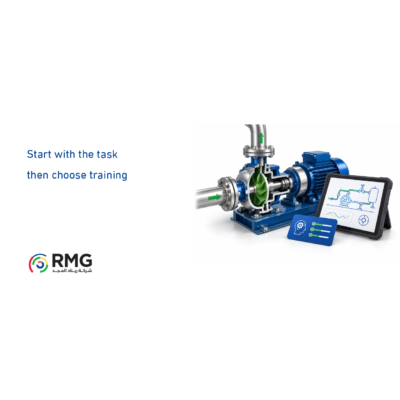
Start with the task rather than a course title
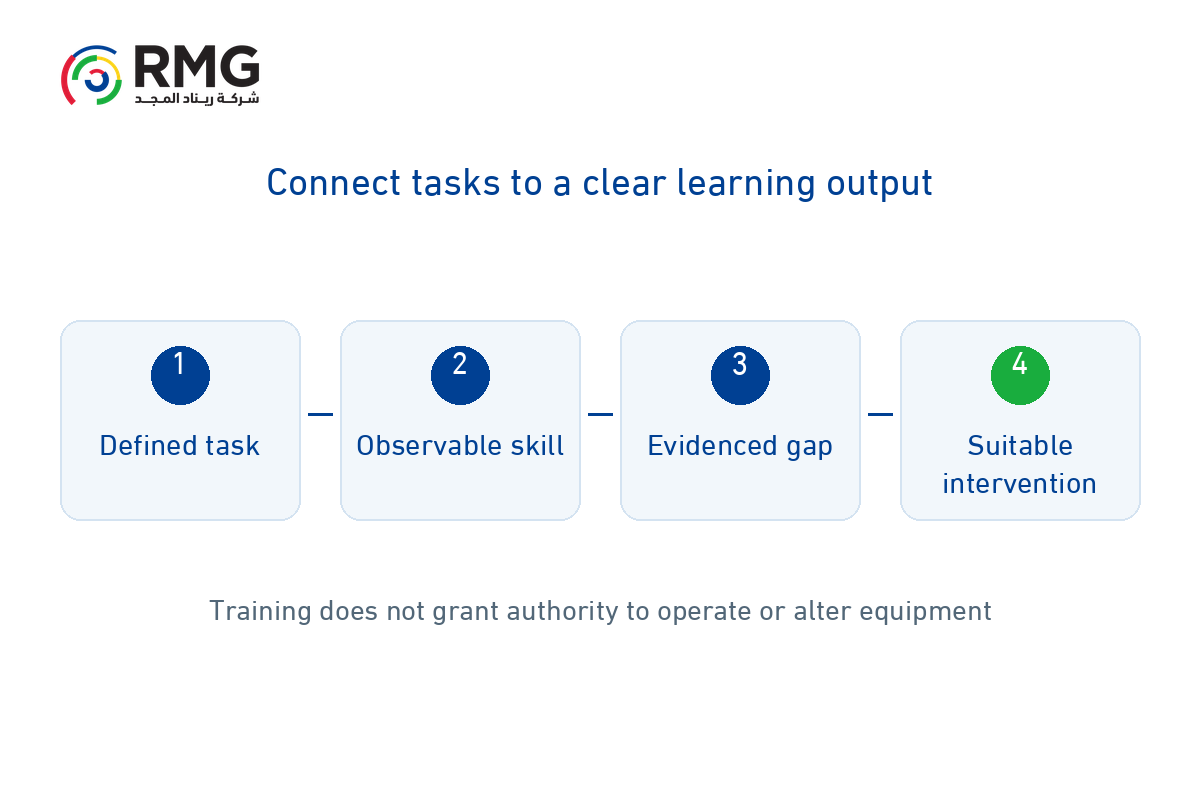
A training plan can contain attractive course names while leaving an operational question unanswered: what should the employee be able to do better? In oil and gas, interpreting a process diagram differs from documenting a maintenance observation or handing over a shift. Bring training, operations, maintenance and safety together to identify priority tasks, observable behaviours and suitable evidence. Do not assume every performance issue reflects missing knowledge. An unclear procedure, outdated drawing, unavailable tool or workload may be the cause. Training becomes an appropriate intervention when evidence identifies a skills gap, rather than an automatic response to every operational problem.
Define the skill and its authority boundary
Use a specific learning verb such as interpret, distinguish, document or escalate rather than a broad ambition to understand operations. Identify the approved reference, assessment context and competent assessor. HSE guidance distinguishes training from competence and links competence assurance to responsibilities, activities and tasks identified through risk assessment. [2] This is a British professional reference rather than Saudi law. In the proposed approach, reading a drawing does not authorise someone to alter system settings or operate equipment. Authority remains subject to site procedures and specialist assessment. State both the scope and exclusions of the objective, particularly where learning intersects with high hazard work.
Check the gap with appropriate evidence
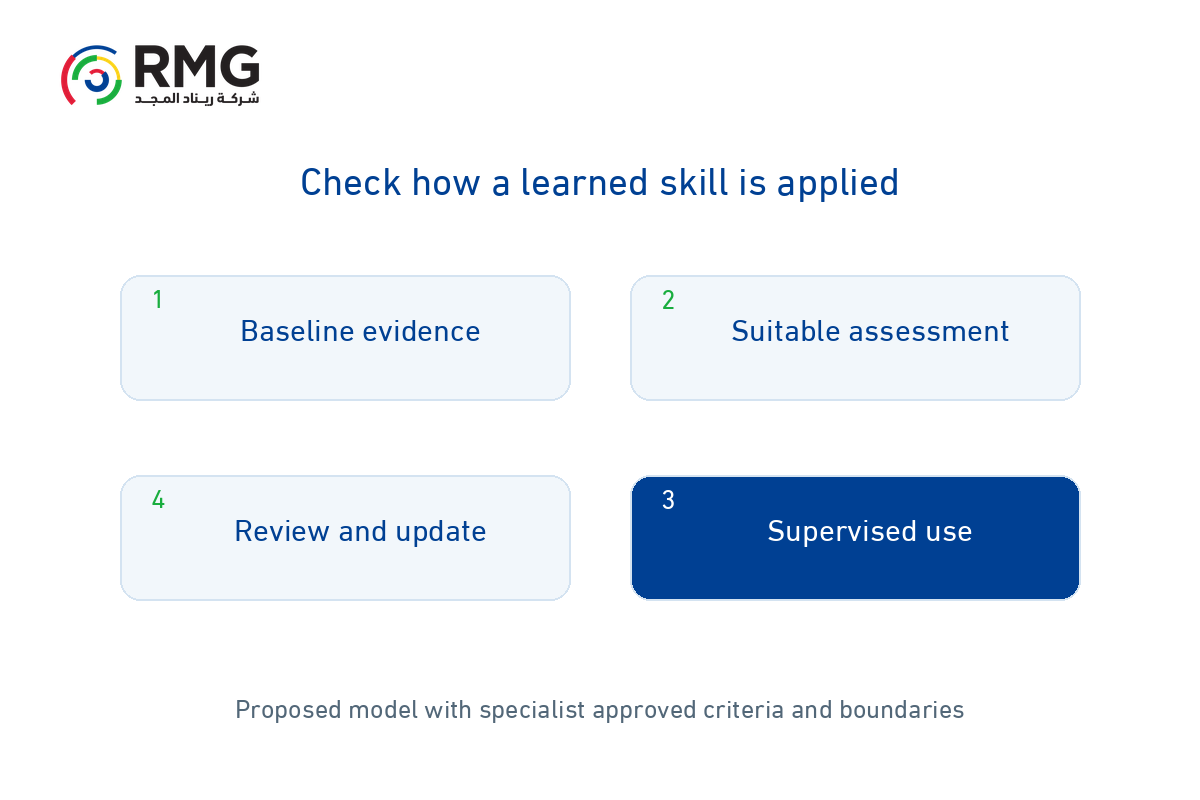
Use a work sample review, case discussion or assessment in a safe training environment under a competent specialist, with an explicit criterion for each task. An employee may recognise a drawing symbol yet struggle to connect it to an observation in a training case. Record the demonstrated gap without generalising to the workforce or treating one theoretical test as proof of field performance. Separate knowledge, application and professional judgement, allowing for language, prior experience and access to documents. Review protection and access arrangements for assessment records. If the issue lies in a document or procedure, assign someone to correct it rather than book a course that does not address the cause.
Choose a programme that addresses the actual gap
RMG’s Oil and Gas Process Engineering course page describes coverage of process principles, equipment, diagrams, control and safety, with cases and practical work. [1] Compare that scope with the team’s gap: who needs foundations in processing stages, who needs drawing interpretation and what prerequisites apply? Ask the provider to confirm content, assessment and example suitability before nomination, without assuming that a general course covers your facility’s procedures. Internal learning on approved site documents may complement the programme, subject to review by the site owner. Do not promise professional certification, fewer failures or improved safety unless documented evidence and specific programme details support those claims.
Prepare transfer to work before training begins
Agree a suitable follow-up task, accountable manager, qualified assessor and safe opportunity to practise before the course. An output might be a case discussion using an authorised training copy of a drawing, or a better maintenance observation description using the site template, rather than a live operational change. HSE lists plant specific training, procedures and safe systems of work among the needs of operations and maintenance teams. This helps inform training design without importing another jurisdiction’s requirements as local law. Record what requires supervision, what the trainee must not perform and how to escalate an unclear procedure. Learning never justifies bypassing a work permit, safety procedure or approved authority.
Use a matrix that can be updated
The table contains hypothetical tasks, skills, gaps, interventions and follow-up evidence. It is not an assessment of a facility or an operating procedure. Specialists should review each row and set an appropriate acceptance criterion. Add an owner, procedure reference, document version, evidence review date and follow-up decision to the organisation’s record. When equipment or procedures change, reconsider whether earlier evidence remains relevant rather than treating a skill as permanent. Avoid turning the matrix into a punitive employee ranking. Its purpose is to choose an appropriate intervention and document the support needed. Assignment of sensitive work and judgements about occupational competence remain with authorised specialists.
| Task and skill | Gap and proposed intervention | Proposed application evidence |
| Interpret a process drawing | Difficulty linking symbols; drawing case learning | A documented case explanation reviewed by a specialist. |
| Document a maintenance observation | Incomplete description; site template learning | Sample descriptions against approved criteria. |
| Hand over shift information | Missing context; guided handover practice | Review of information completeness and escalation. |
Measure application and separate law from recommendation
Distinguish course completion, demonstrated skill in a suitable assessment and sustained use within the person’s authority. Possible follow-up measures include observation completeness or handover information quality using comparable samples and noting changes in procedure or workload. These are illustrative indicators rather than achieved results; fewer failures must not be attributed to training alone. In Saudi Arabia, HRSD describes the employer’s obligation to inform workers about occupational risks, provide suitable personal protective equipment and train them in its use. [4] The matrix and follow-up cycle proposed here are management practices rather than legal text. Specialists should check current facility, activity and operator requirements before approving a programme or field application.
Prepare a focused discussion with RMG
Bring a bounded task list, target roles, gap evidence, references authorised for sharing and a suitable method for checking learning application. RMG offers an Oil and Gas Process Engineering programme; confirm its details, schedule and suitability with the team before registration. [1] This preparation supports a more precise discussion about foundational knowledge, guided practice or an internal procedure review. A long course catalogue is unnecessary as a starting point. Begin with a documented gap, clear output and accountable follow-up owner. Contact RMG to discuss sector specific training linked to operations and maintenance tasks and appropriate evidence of application.