
















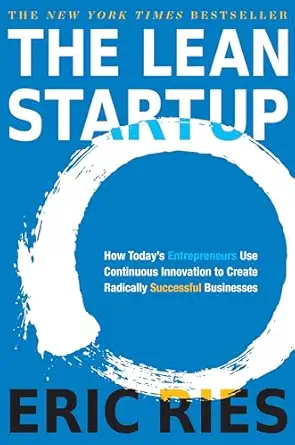
Book Summary - The Lean Startup
Introduction
How Todays Entrepreneurs Use Continuous Innovation to Create Radically Successful Business
The book opens with a foundational assertion: entrepreneurship is not an art, but a distinct form of
management that demands its own specialized discipline. The author argues that traditional management
principles, which depend on planning and forecasting in stable environments, are profoundly ill-suited for
the chaotic reality of a startup. The Lean Startup method is therefore presented as a rigorous alternative,
engineered to prevent the colossal waste of time, money, and passion that results from building on untested
assumptions
Table of Contents
Part One: Vision …………………………………………………. 3
Chapter 1 A New Management Discipline for Uncertainty ……………………………………………… 3
Chapter 2 Defining the Modern Startup …………………………………………………………………………….. 4
Chapter 3 The Principle of Validated Learning ……………………………………………………………………. 5
Chapter 4 The Scientific Method of Experimentation …………………………………………………………… 6
Part Two: Steer ………………………………………………………………. 7
Chapter 5 Identifying Leap-of-Faith Assumptions ………………………………………………………………. 7
Chapter 6 Testing with a Minimum Viable Product (MVP) ………………………………………………….. 8
Chapter 7 Measuring Progress with Innovation Accounting ……………………………………………….. 9
Chapter 8 The Strategic Decision to Pivot or Persevere …………………………………………………….. 10
Part Three: Accelerate …………………………………………………. 11
Chapter 9 The Power of Working in Small Batches …………………………………………………………… 11
Chapter 10 The Three Engines of Sustainable Growth ………………………………………………………… 12
Chapter 11 Building an Adaptive Organization …………………………………………………………………. 13
Chapter 12 Fostering Innovation in Large Companies ………………………………………………………… 14
Overall Impact and Significance ………………………………………………………………………………………. 15
Conclusion and Recommendation …………………………………………………………………………………… 15
About the Author …………………………………………………………………………………………………………. 16