









Artificial Intelligence Solutions
If the definition of intelligence is a speed in understanding and intuition, and an intellectual and cognitive activity that the mind performs, and it is not a condition that intelligence is associated with academic or methodological achievement as is known to some. Then it may go beyond it to other aspects such as social, linguistic, and mathematical intelligence, so a type or more types of intelligence distinguish each person. Artificial intelligence is the ability of a machine to simulate the human mind and its way of working, such as its ability to think, discover and benefit from previous experiences.
Artificial intelligence also defined as a group of systems that aim to make digital machines, computers, and modern technologies able to achieve certain goals in a way that is similar to humans or exceeds the ability of humans in most cases. In other words, they are systems that simulate human intelligence to perform tasks and that have the ability to improve themselves by using the information they collect.
When researchers talk about intelligence, they are referring to a specific set of skills that include brain abilities, learning, and planning to solve problems. The interesting thing is that people who are good at one of these skills are good at the rest. These skills seem to reflect a broad mental ability that dubbed general intelligence. They said, “Know the intelligence for us … we make an artificial intelligence for you.
To solve global challenges, everyone must work to connect artificial intelligence innovators with problem owners. The near future will witness a significant impact in our lives by artificial intelligence. With recent advances in artificial intelligence, machines will gain the ability to learn, improve, and make calculated decisions in ways that will enable them to perform tasks that previously believed to depend on human experience, creativity and ingenuity.
Today, artificial intelligence offers valuable solutions, creative solutions, and even innovative solutions, for most jobs, businesses and fields. Scientists expect that artificial intelligence will soon solve the United Nations’ Sustainable Development Goals as AI holds great promise by leveraging the unprecedented amounts of data that are now being generated about emotional behavior, human health, trade, communications, and migration.
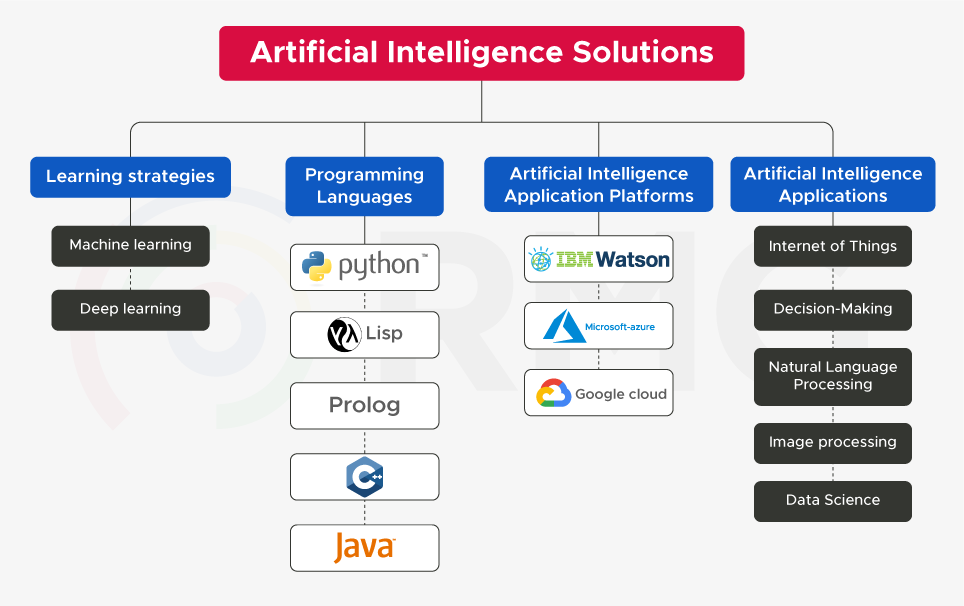
Learning strategies for artificial intelligence
Machine learning
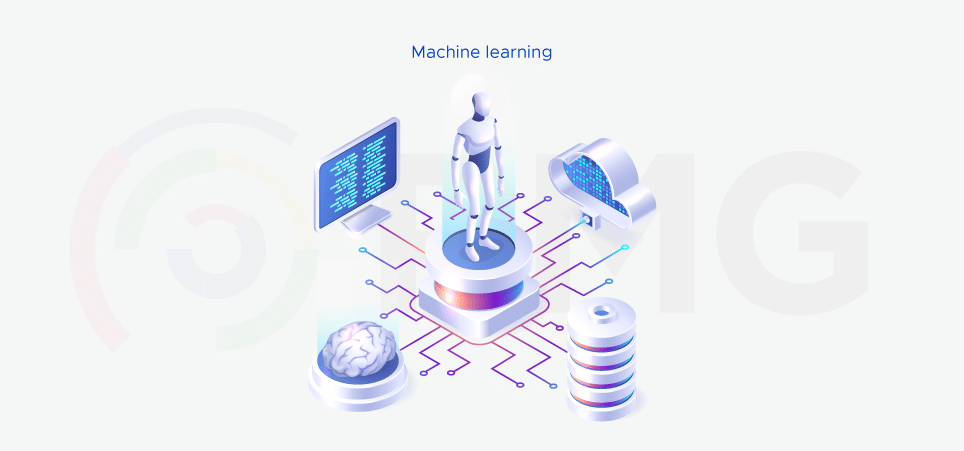
Machine learning is a form of artificial intelligence, and artificial intelligence is not always machine learning. Most machine learning algorithms rely on the intervention of data scientists to derive features and patterns of data before these algorithms consume it. Algorithms learn by observing a large number of cases and focusing on manually preset patterns and features. In simple terms, most machine learning algorithms rely on two basic steps in their learning: observation and simulation (prediction) – and this is in a group of algorithms that rely on supervised learning, or learning by observing previous events with known results. First, it monitors the input data and tries to devise distinct patterns and characteristics of this data, and then it simulates the behavior of jobs based on the connections and relationships that formed by monitoring the process of converting the input data into specific outputs. The primary function of machine science is to predict results based on data given to them. The more diverse the data provided to her, the easier it is for her to find patterns and predict outcomes. Where there are two methods of data collection, manually and automatically, the manual method is the most accurate and most secure to obtain correct and accurate data, but it takes a longer time to collect. While the automatic method is faster, but the correctness and accuracy of the data not guaranteed. Among the most important basic sciences for machine learning are mathematics, including calculus, linear algebra, statistics, probability, graph theory, and programming skills.
Deep learning
Artificial intelligence languages
Python is one of the most important programming languages that used in the development and teaching of artificial intelligence. Through the Python language, machines that will run with artificial intelligence can now be programmed and taught, so any machine can programme to do the work that it wants to do and at the same time the machine learns by itself and develops itself and this is the future Artificial intelligence.
Python also owns several libraries specializing in artificial intelligence, such as the Numpy and Scipy library for scientific computing and advanced computing, and the Pybrain library, which is one of the most popular libraries used in machine learning.
Prolog is a high-level language and it is one of the most important languages of artificial intelligence and expert systems, and the secret of this language lies in the attempt of its developer to use explicit regional phrases to give orders to the computer and carry it out. It considered an interactive language between humans and computers as a natural language. Prolog also plays an important role in several fields, specifically artificial intelligence, and this comes because it deals with logical sentences in the form of relationships that clarify rules and facts alike.
Among the most prominent characteristics that characterize Prolog language and its uniqueness from other programming languages is the standardization, retraction, and self-recall feature, where the expressions on the command lines in this language made similar to each other in terms of structure and composition. The program can also execute the previous task in the event that one of the tasks fails it also has the feature of self-recall has become one of the most important programming languages in the search.
Among the features of Prolog is the ease of creating databases, the great ease in performing matching patterns by relying on the method of self-recall, the ability to build lists with flexibility and relying on logical methods to achieve the desired goal of the queries.
Artificial Intelligence Application Platforms
Google Cloud AI
Microsoft Azure AI
IBM Watson
The IBM Watson AI platform enables integration and training on a flexible information architecture for developers to accelerate the development and deployment of AI application models. It provides tools for developers, such as ready-made packages and detailed documentation, and developers can integrate Watson Assistant to build conversational AI-powered interfaces.
The IBM Watson AI platform also provides solutions for financial services, Internet of Things, media, healthcare, oil and gas, advertising, and many other areas.
Artificial Intelligence Applications
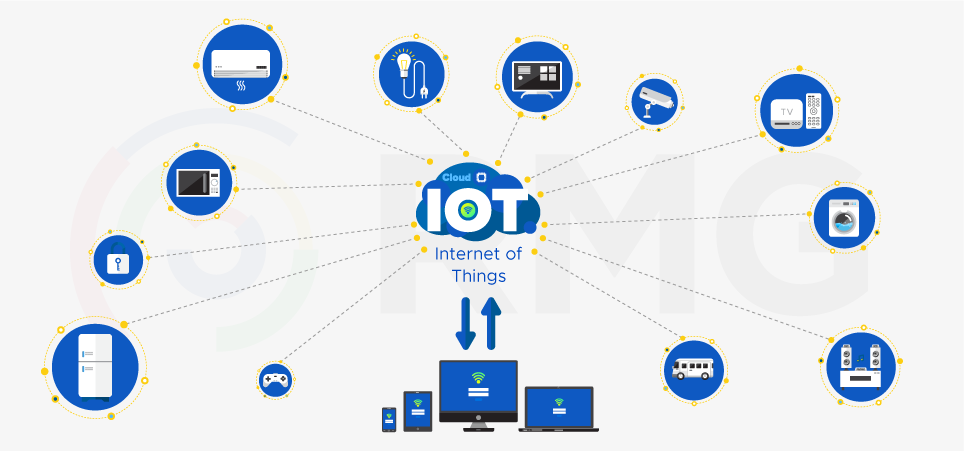
The start-up projects related to the Internet of Things have become dependent on the use of artificial intelligence techniques in a very large way, and it is increasing. Where language processing, which is used in voice, aids, especially with the proliferation of smart speakers, those devices that can use and process audio data to perform various tasks according to what the user enters. Because of artificial intelligence and the Internet of Things, for example, sensors connected to smart devices in the future will be able to collect various data and act on their own based on the data captured by these sensors, which will severely affect the way we deal with these smart devices. It will also allow the data extracted from sensors in smart devices that all connected to the Internet of things to assist service providers, especially electricity companies, in making better strategies for energy distribution and use. Therefore, the integration of artificial intelligence with the Internet of Things will produce the superpowers of innovation in the future
Artificial intelligence models have become a prominent role in the decision-making process, as they simulate human mental capabilities and patterns of work, such as the ability to deduce, react, learn and gain experiences.
Where artificial intelligence intended to simulate and bypass the human mind through the capabilities of collecting and analyzing data, and making intelligent, accurate and high-level decisions.
Indeed, some applications have begun to appear that help the decision-maker to reach a decision based on data, analyzes and predictions with the ability to reach decisions with a high degree of reliability. Artificial intelligence has contributed to making decisions that contribute to economic and expansionary gains by relying on independent algorithms more than talented managers, today, management science with algorithms is among the skills that companies are keen to provide to ensure sustainability and accuracy in decision-making.
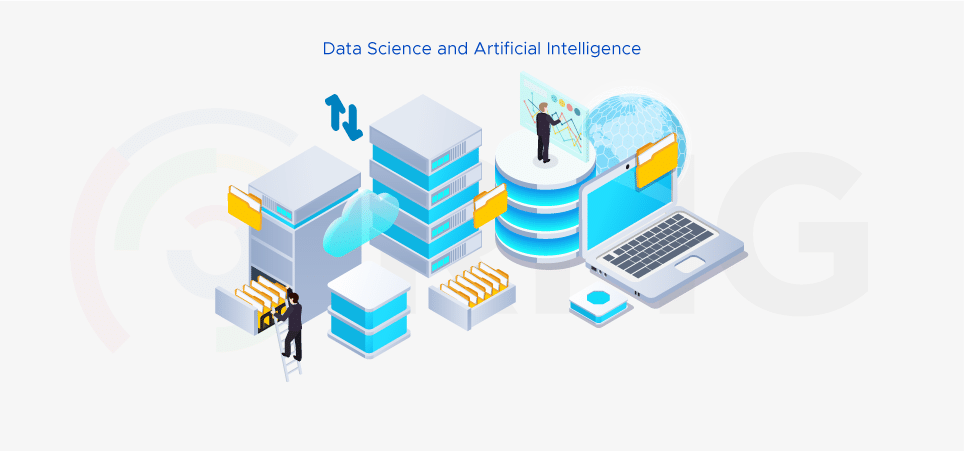
Data science is the science of using algorithms, methods, and systems to extract knowledge, statistics, and insights from structured and unstructured data. It uses analytics and machine learning to help users make predictions, improve optimization, and improve processes and decision-making. The data science life cycle begins with collecting data from relevant sources, refining it, putting it into a format that machines can understand, and then using statistical techniques and other algorithms to find patterns and trends. Models then programmed and built to predict and forecast; finally, the results interpreted. Evident advances in artificial intelligence and machine learning have raised the standards for data science tools in various commercial and industrial fields.
Natural language processing is a sub-science of artificial intelligence that is a branch of informatics, and it overlaps greatly with the sciences of linguistics that provide the required language description for a computer. This science is the basis of the software industry that can analyze, simulate and understand natural languages. Natural languages have different levels of analysis. As for written texts, their analysis passes through several stages that differ according to the method of analysis. However, one of the most common methods of analysis follows the following three stages: morphological analysis, syntactic analysis, and semantic analysis. In addition, natural language processing has various fields such as automatic text reading, speech recognition, automatic text generation or speech, machine translation, understanding and answering questions, information generation, information extraction, text editing, translation techniques and automatic summarization.
Artificial intelligence has good results in image processing, as many scientists have used artificial intelligence to create a high-definition version of a low-resolution image. The technology for creating a large image size from a low-resolution image known as a super-single-image technique. This technique studied for decades, but has limited results.
